


Ever dream of operating powerful artillery pieces all alone, making precise calculations and calibrations, pulling, turning, and swiveling all sorts of mechanical devices, and then watching your work go BOOM as you hit your designated target right in the center? That's exactly what you'll do in Iron Nest. Read our Iron Nest first impressions for more details.
The Colossus has Arrived
Developed by a small but incredibly passionate team of two Polish developers, Iron Nest is, at its core, a fairly confined experience. For most of the game (at least in the playtest build I played), you'll be restricted to the cramped, claustrophobic interior of your mobile artillery fortress, known simply as the Iron Nest. Inspired by dieselpunk aesthetics, Iron Nest is set in an alternate-history Spain in the late 1920s, during a republican uprising.
While the monarchy is still clinging to power, you are entrusted with a crucial mission: to operate a brand-new machine, the jewel of Spanish military engineering: the indomitable Iron Nest. This beast of a machine is capable of sawing destruction across the Iberian Peninsula. And all of this immense power has been placed in your hands, along with the suffocating responsibility that comes with it.
Wake Up, Operator: It's Time to Blow Stuff Up
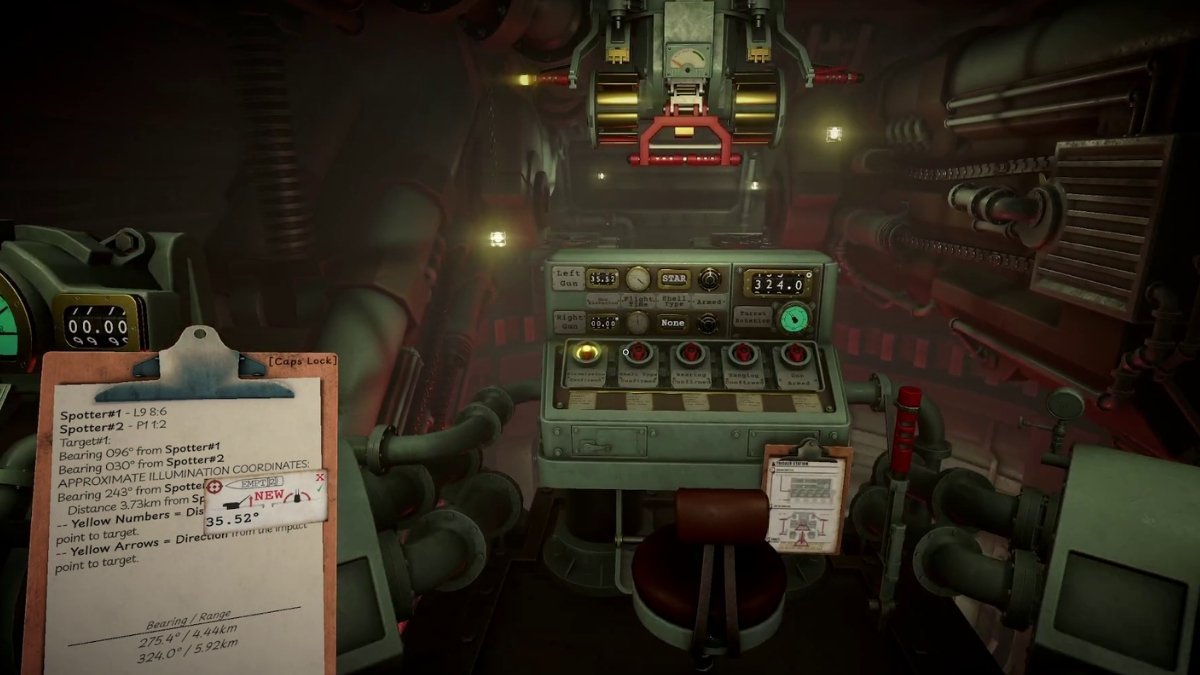
For a game centered around interpreting commands, taking precise measurements, and performing careful calculations, the core gameplay loop is surprisingly easy to grasp (in a positive way). After just a few initial missions, I already had a fairly solid understanding of the game's fundamental mechanics and systems. Iron Nest does an excellent job of explaining its mechanics without being intrusive or overwhelming, allowing players to learn naturally as they play.
In essence, every mission follows the same pattern: read orders from High Command, collect any relevant data from Field Reports, conduct measurements on the Tactical Map to locate your targets, perform ballistic calculations to determine the required elevation, load the gun with the correct ammunition, set the gun's rotation and elevation, and finally, pull the trigger and wait for the shell to hit its target (or miss, if you're unlucky).
RELATED: Complete Iron Nest Beginner's Guide
Of course, things will get more complex fairly quickly as you progress through the missions, with more targets, greater target variety, two active guns, countermeasures, incomplete data, and so on. But the core knowledge you'll learn within the first few missions, available in the demo, will carry you through the rest of the game.
The Essence of Tactile Gameplay
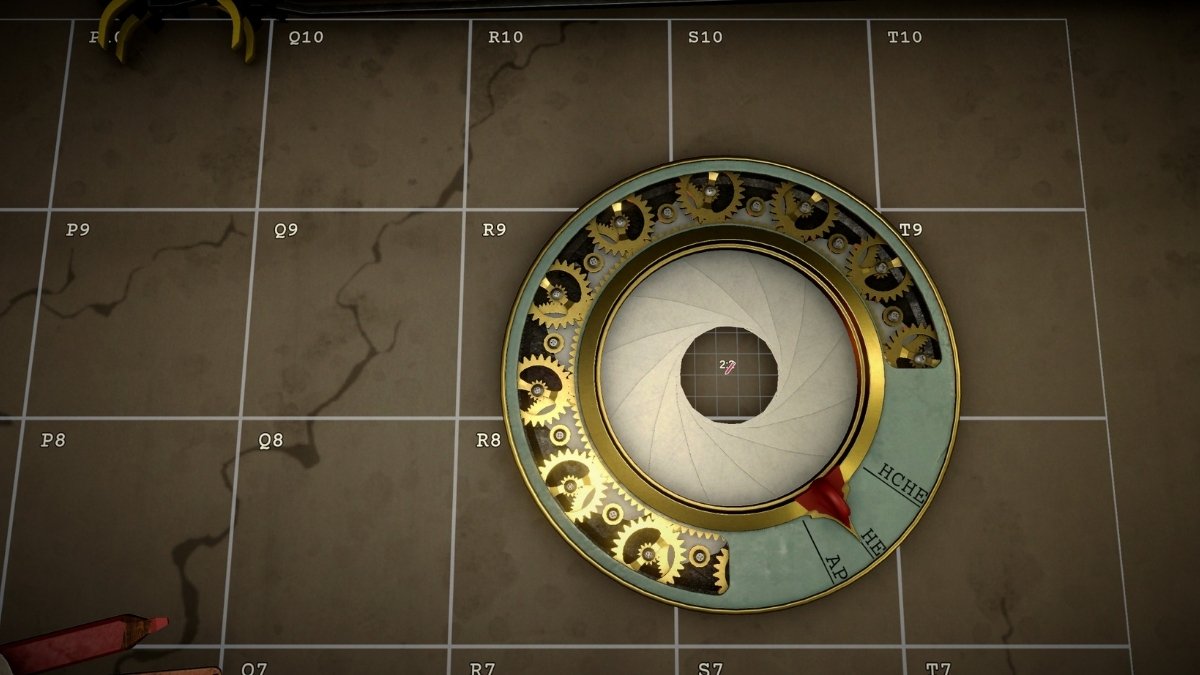
Doing measurements and finding your targets feels good, but it wouldn't work nearly as well if it weren't for the masterfully tactile controls behind just about everything you do. Every (and I mean, EVERY) action you do in-game has its natural place in the environment, and it doesn't feel “gamey.” Iron Nest boasts gameplay that feels physically responsive, weighty, hands-on, and satisfying through interaction, controls, feedback, and mechanics.
RELATED: Iron Nest Map and Measurements Guide – How to Find Targets
From jotting things down on your clipboard, to moving pieces on the map, to turning valves and pulling levers, watching as your actions make things move, rotate, and load while producing clicks and other overwhelmingly pleasant sounds just feels so satisfying. Arguably, the manual nature of your actions and the tactile gameplay are, at least for me, one of the main appeals of Iron Nest.
Immersive Diegetic Design
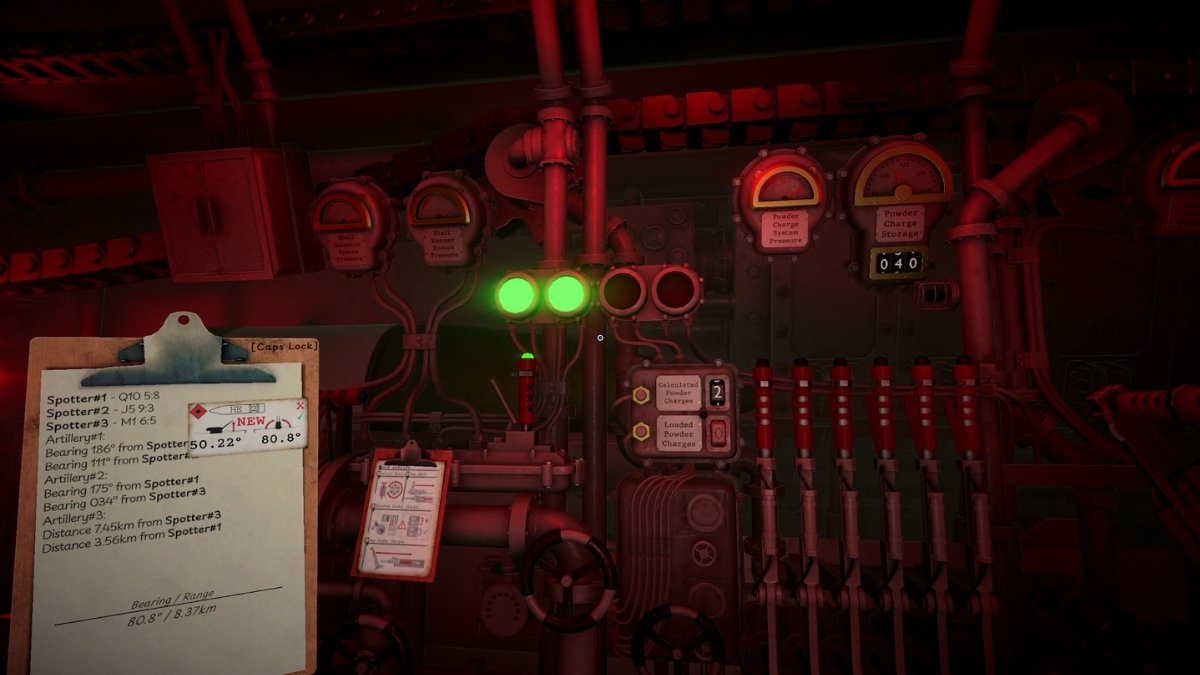
The game does a nice job of presenting instructions for operating the machine without disrupting the atmosphere. Namely, Iron Nest doesn't have UI - not a single element of the game, while playing, is something that breaks the fantasy. And yet, everything you need is present in-game, as everything is subordinate to immersion, in a way that feels completely natural and not forced.
This diegetic UI design helps you forget you're playing a game and places you directly on the battlefield, inside the Iron Nest. Your “quest log” is a giant typewriter where you receive orders from High Command, while the in-game music is controlled through an actual massive gramophone. This includes placing vinyl records, moving the needle, and turning the sound up and down.
You turn valves, pull levers, and move pieces by actually performing these actions with your mouse, then watch as complicated machinery moves with heavy grinding sounds that produce all sorts of clanks, creaks, clicks, and other rumbling noises. Nothing beats the satisfying clank of metal on metal and the crisp, tactile clicks of heavy gears.
Can't Wait For More
The first four missions I've played in the test build have absolutely piqued my interest in a way I couldn't have imagined, resulting in me playing challenges while desperately waiting for the full release and continuation of the campaign. Not just because I want to learn more about the story, which is relatively vague but quite interesting and presented through newspaper front pages after each mission, but also because I can't wait to see how other missions will work once things get extremely complicated and tense.
RELATED: Iron Nest Counter-Battery Fire Guide – How to Stop Enemy Artillery
For now, if you're enjoying the demo, make sure to check out our dedicated Iron Nest hub, where you'll find all sorts of guides, walkthroughs, tips, and tricks that will help you master this heavy metal beast. Thanks for reading my Iron Nest first impressions!


