


Graveyard Keeper 2 is a crafting game that drops you into a world where you manage corpses, grow a graveyard, automate production with zombies, and gradually rebuild a ruined town, all while keeping track of your energy, your insanity, and the local economy. With so many systems to juggle, it can be overwhelming for a new player. So this Graveyard Keeper 2 beginner's guide covers everything you need for the best possible start.
Key Notes:
- When starting Graveyard Keeper 2, always eat before your energy runs low, not after, to keep your insanity in check.
- Prioritize cutting trees and unlocking wood-processing tech in the Tech Tree first, then pottery so you can unlock fishing.
- Watch your resources and raise both your NPC relationships and Graveyard Quality to keep progressing. For more detailed beginner tips, check out our complete guide below.
What is the Graveyard Keeper Release Date?
Note that Graveyard Keeper 2 isn't fully out yet. Lazy Bear Games and tinyBuild launch it on September 22, 2026, and everything in this guide comes from hands-on time with the free demo, which covers the opening few hours up to the introduction of The Town. Anything you unlock in the demo carries over to the full game, so you can start following these steps now and keep your progress at launch.
How Do You Farm Food in Graveyard Keeper 2?
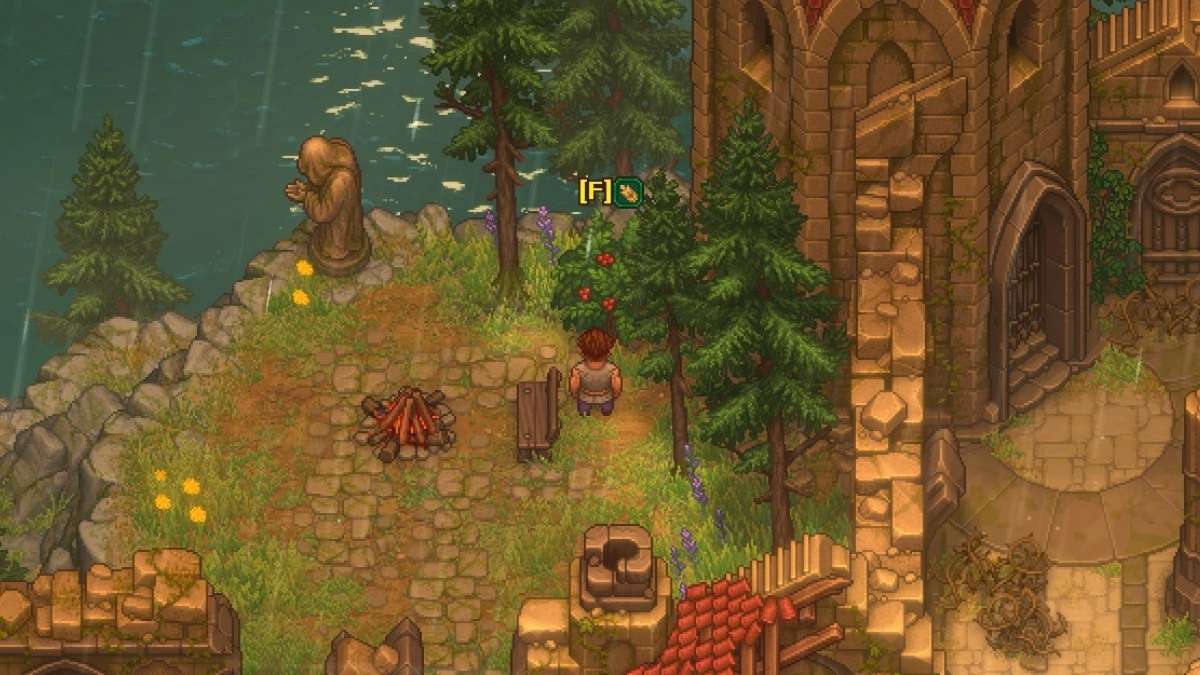
Food is one of the most essential resources in Graveyard Keeper 2, and you'll almost certainly run low on it at the start. Mushrooms and berries are your best beginner food sources, but they restore small amounts of energy (+3 from Berries, +4 from Mushrooms). The problem is that they barely touch your energy bar once you start taking on real workloads. Your better mid-game food comes from other sources.
To get more energy, you can either cook food, buy Berrie Pie from the Inn, or bake bread. You can sell crops from your base plots raw to the village shop for money, or cook them into food that restores far more energy than the raw ingredient does. The same logic applies to fish, which you can sell for income or prepare as food.
As you restore Town buildings, reopened shops add new markets for your goods. The general progression for farming food is mushrooms and berries, then cooked crop food, then finally fish-based food, with each step reducing how often you need to sleep between tasks.
How Do You Cook Food in Graveyard Keeper 2?
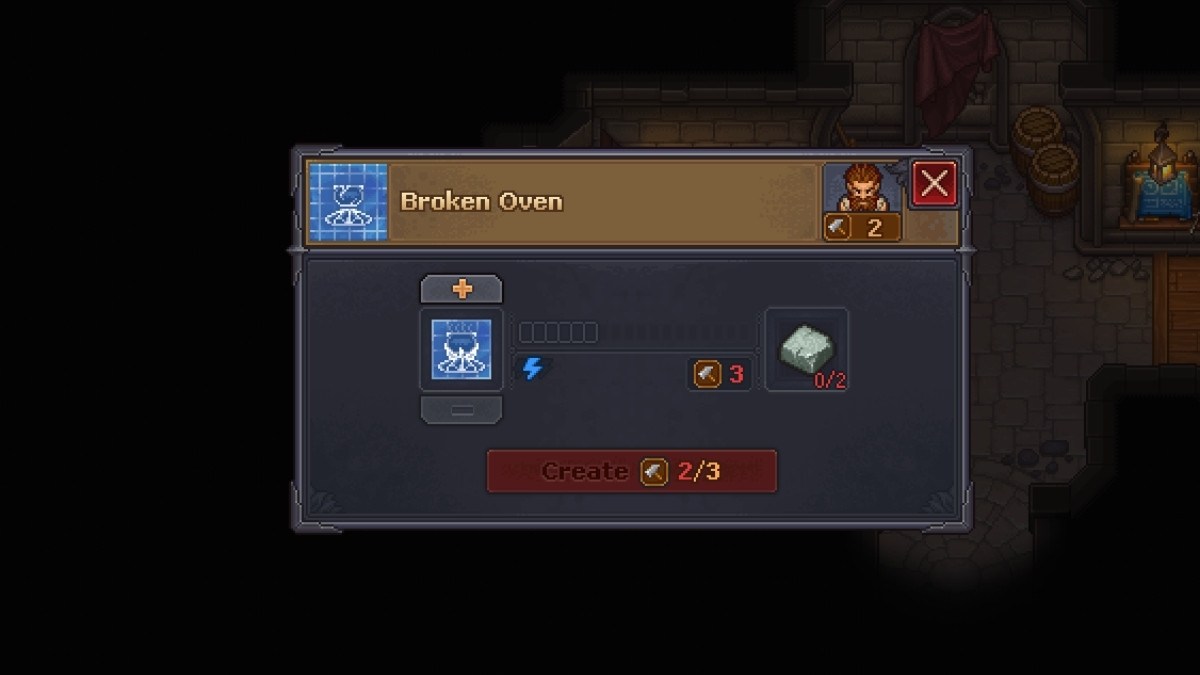
To start cooking in Graveyard Keeper 2, progress through the Tech Tree to unlock the relevant food recipes, then build the cooking station those recipes require. Without the recipe unlock, you cannot cook even if you have all the ingredients.
Bread is the first significant cooked-food upgrade over raw mushrooms. To start making Bread, you need this upgrade chain: Gardening -> Millstone -> Bread, which will cost around 50 Green Tech Points and 5 Red Tech Points. Then repair the Oven in your home to start cooking.
TIP: Prioritize unlocking at least one cooked food recipe early, preferably Bread, so you spend less time sleeping and more time progressing.
How Do You Fish in Graveyard Keeper 2?
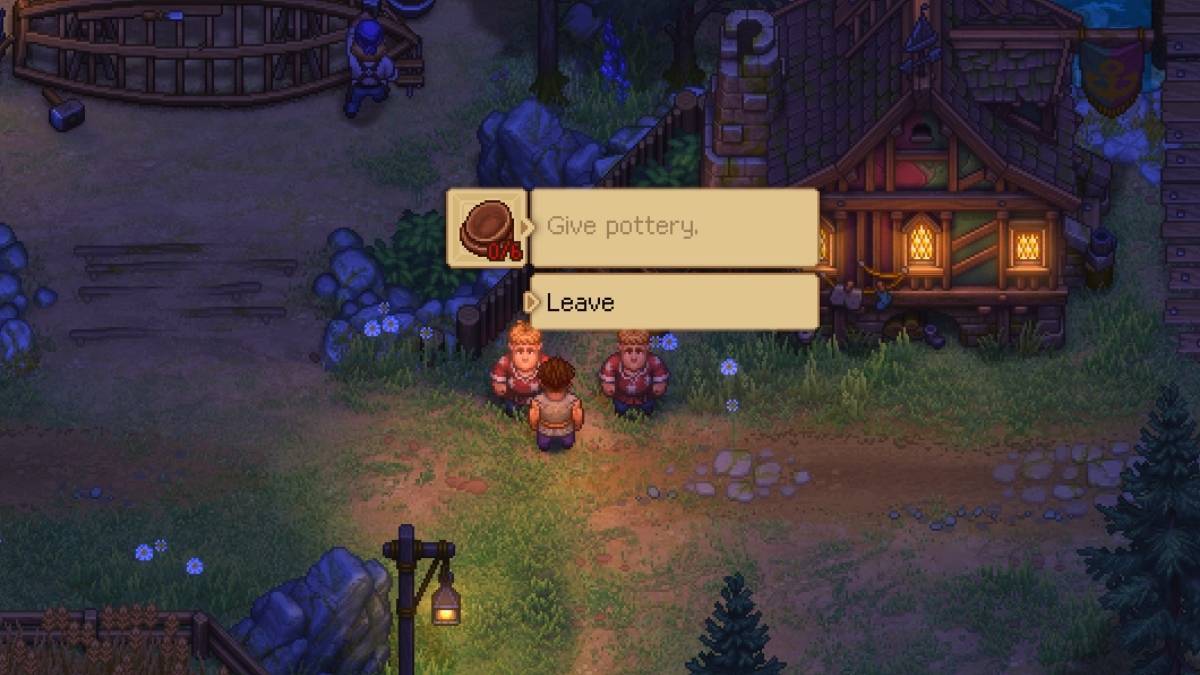
Fishing in Graveyard Keeper 2 is gated behind an early quest. The twins near the merchant took his fishing rod and will only trade it back for pottery, so fishing isn't available at the start, and you need to unlock Pottery before you can begin.
Once you have the rod, find a fishing spot and match your bait to the spot you are using. Different spots have different fish populations, and using the wrong bait reduces your catch rate.
From there, you can catch and sell your fish to the shop, or push through the Tech Tree to craft food that restores energy. Because fishing doubles as a food and income source, unlocking it early significantly shortens the overall resource grind.
How to Farm Crafting Materials in Graveyard Keeper 2
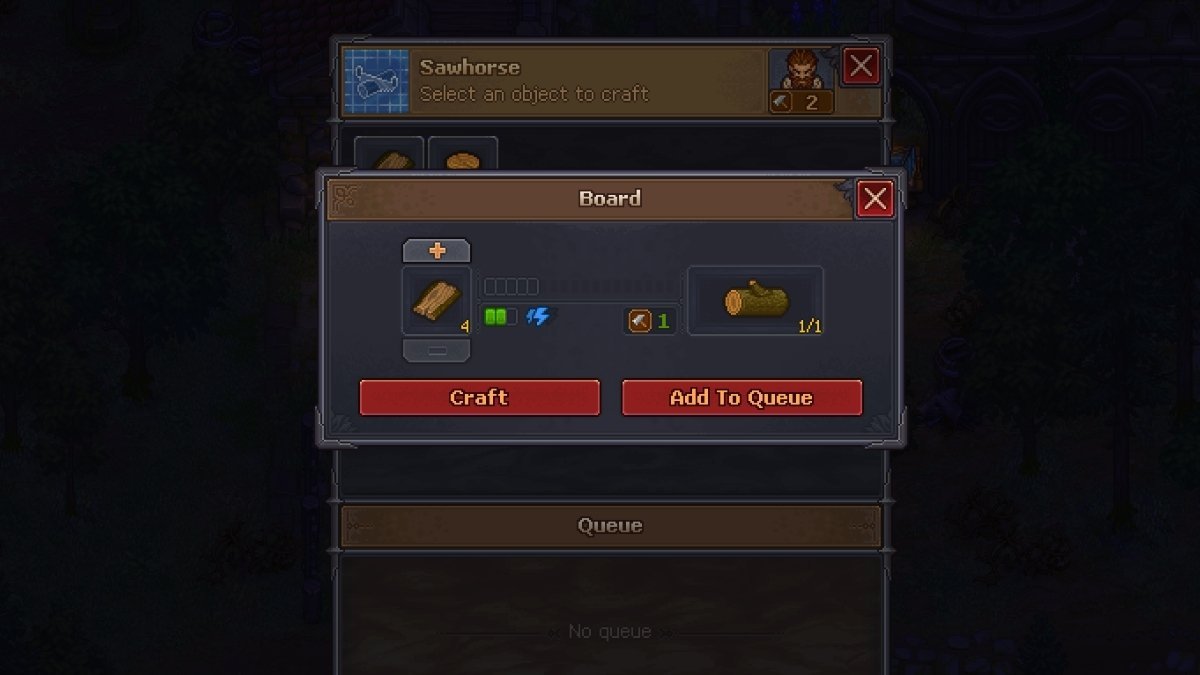
The three most important early crafting materials are wood, clay, and stone. Everything else in the opening hours is built from combinations of these, so here's how to farm all of them:
1. Wood comes from cutting trees around your base. It is the most consumed early resource and feeds almost every construction recipe, which is why unlocking Concept of Wood, followed by Chopping and Woodworking I, should be your first Tech Tree priority.
2. Stone is the next most basic resource you will need, and you get it by mining rock nodes around the map. You use it in crafting stations like the Pottery Wheel and in various building blueprints. Note that you need to unlock Concept of Stone, and later Stone Polishing, to use it in crafting.
3. Clay comes from the brown patches of land scattered across the map. It is the core material for pottery (unlocked from Pottery I) and is also used in later building recipes. Mark the clay locations on your map so you don't waste time searching for it mid-quest.
NOTE: Stack up on Red Tech Points by chopping wood and mining stone and clay. Every Tech under the Building and Metallurgy trees requires Red Tech Points.
How Do You Make Pottery in Graveyard Keeper 2?
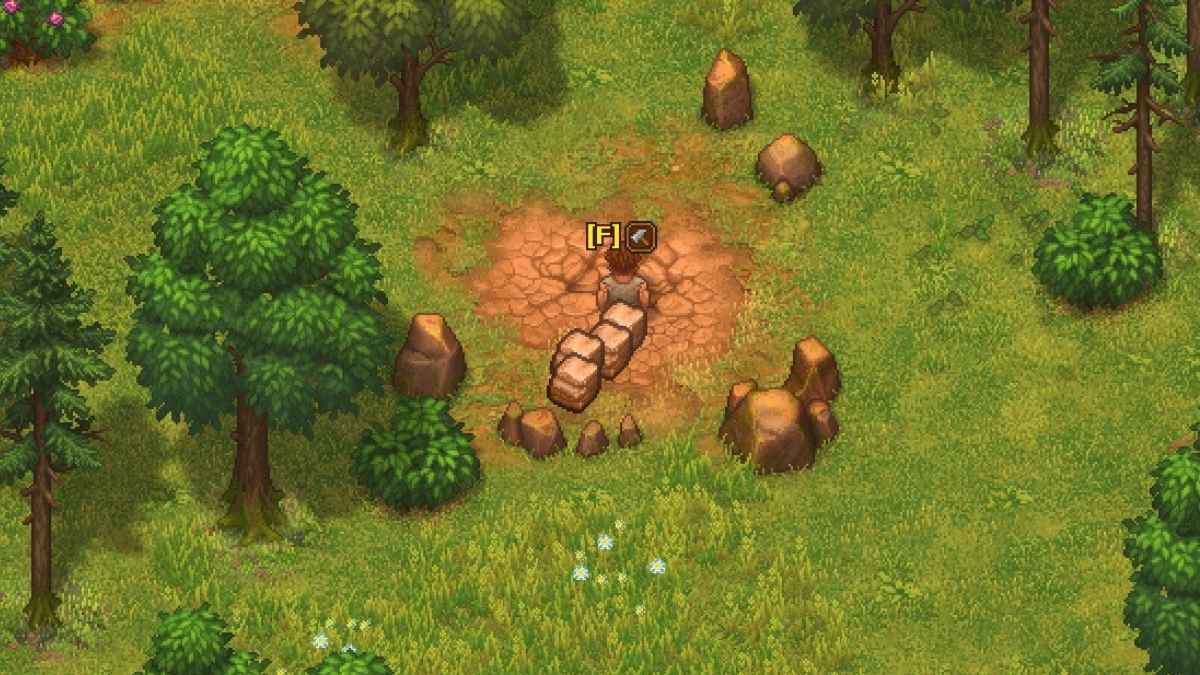
Pottery is one of the most important early upgrades in Graveyard Keeper 2 because you need it to complete the fishing rod quest. Follow these three steps:
Step 1: Unlock Pottery I in the Tech Tree
Open the Tech Tree menu and go to the Building tab (first tab from the left). Pottery I costs 10 Red Tech Points and 5 Green Tech Points. You cannot use the Pottery Wheel or follow any pottery recipe without this unlock.
Step 2: Build the Pottery Wheel
Go to the Crafting Table and construct a Pottery Wheel using 2 Wooden Planks and 1 Stone. This is your dedicated station for all pottery production.
Step 3: Mine Clay and Produce Pottery
Find the brown clay patches on the map and mine enough Clay for your recipe. At the Pottery Wheel, input 2 Clay to produce a Clay Plate. For the fishing rod quest, hand the Clay Plate to the twins to receive the rod.
You unlock more pottery recipes as you progress further through the Tech Tree's Building tab.
What Is the Best Build Order in Graveyard Keeper 2?
When you start Graveyard Keeper 2, building things in the wrong order wastes time and Tech Points. These are the priorities that help you progress efficiently:
- Wood processing: Unlock Concept of Wood -> Chopping -> Woodworking I from the Tech Tree before anything else, then craft a Chopping Spot and a Woodworking Bench. Every building and most crafting recipes need planks.
- Garden Beds: After wood, invest in food. Follow Gardening -> Millstone -> Bread, build Garden Beds to farm Wheat, and use a Millstone to turn it into Flour. Use your Oven to bake Bread.
- Stone & Pottery: Research the Concept of Stone and Pottery I once wood and food are sorted. Then build a Stonemason's Workbench and Pottery Wheel to produce building materials and finish the Pottery Quest.
- Morgue Autopsy Upgrades: Once your resources are stable, focus on autopsy upgrades. Research Soft Parts -> Skin & Bones -> Skull & Teeth. These raise your Mastery and let you extract more parts from a corpse, which directly affects your skull counts and zombie quality. Get them upgraded before you start receiving higher-quality corpses.
- Graveyard Decoration: The last priority is Graveyard Decoration to raise your Graveyard Quality. Research Wood Gravestone I for basic gravestone upgrades, then start burying corpses.
Once you've done these, you are set for the early game. Progress toward the Zombie Assistant to start on mid-game upgrades and Town defenses.
How Do You Improve Your Graveyard in Graveyard Keeper 2?
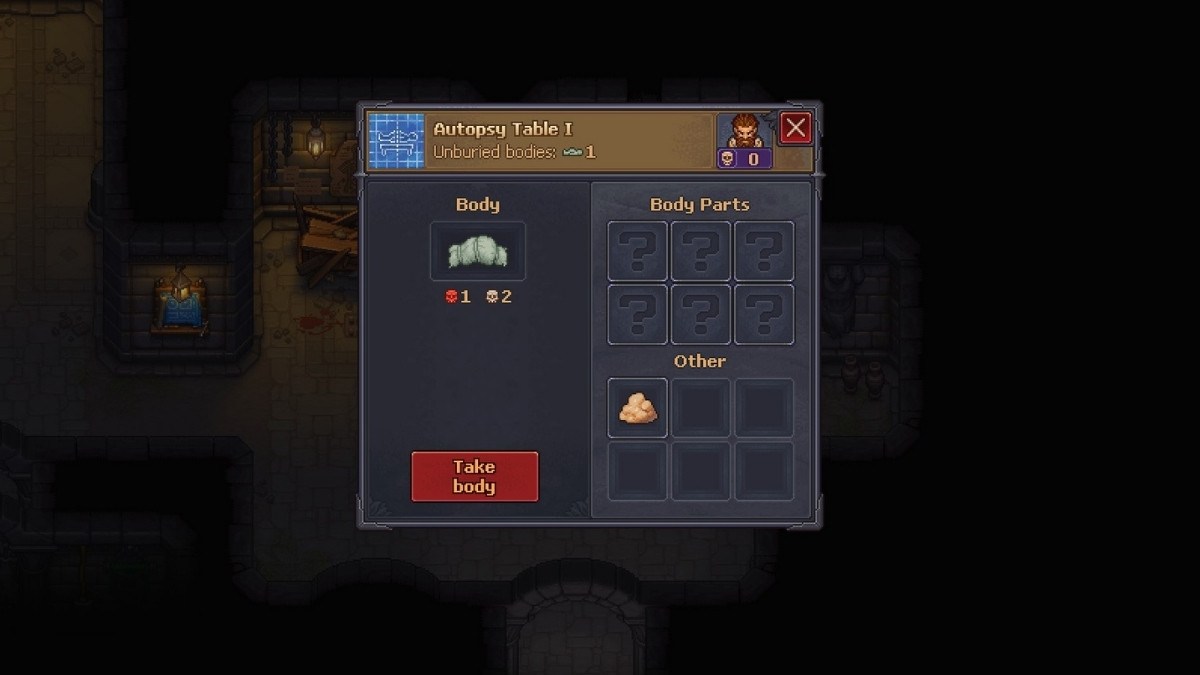
Your Graveyard Quality (also shown as your graveyard rating) is determined by the combined quality of everything inside it. Before any burial, clear leftover rocks, trees, and empty holes with no corpse.
For each burial, maximize the white skull count on the corpse before you bury it. White and red skulls cancel each other out (a corpse with three white skulls and two red skulls leaves you with one net white skull at burial). Remove body parts during autopsy to increase the white count.
Removing certain organs requires a higher autopsy skill, and failing with a low skill triggers a surgeon's error, which raises the red skull count instead of helping. Pair each burial with a wreath or marker for an extra rating bonus.
Each properly prepared burial plot displays a skull-quality number, and higher is better. The early-game target is reaching a Graveyard Quality of 10 white skulls to clear your first major burial goal. Later, you can add tombs, benches, columbaria, and monuments, each of which adds to your rating when placed.
How Do You Progress in Graveyard Keeper 2?
Several systems feed into your progress in Graveyard Keeper 2, including Technology Points (Red, Green, Blue), Energy, and Insanity. Here's what you need to know about each:
How Do You Farm Technology Points in Graveyard Keeper 2?
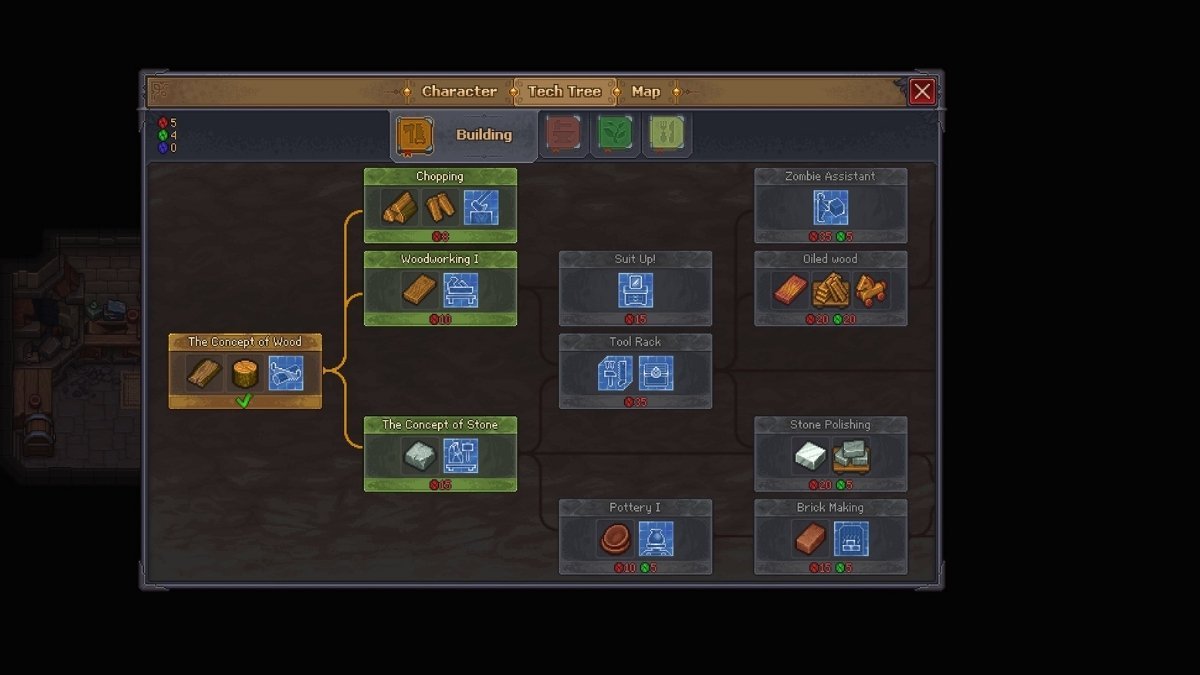
Technology Points come in three colors (Red, Green, Blue), each tied to different Tech Tree branches. Almost every action generates some form of Tech Points, with gathering, chopping, crafting, autopsy work, and construction all contributing. Here's how to earn each:
- Red Technology Points: You earn these from manual labor like chopping wood, mining stone, digging clay, and crafting from those resources. They mainly unlock the Building and Metallurgy trees.
- Green Technology Points: You earn these mainly from collecting berries and mushrooms, planting seeds, and farming in general. They mainly go toward Farming and Cooking upgrades.
- Blue Technology Points: You mainly earn these from anatomy work such as autopsies, and you spend them on the Anatomy & Alchemy tree.
The key point is that grinding Tech Points alone doesn't unlock everything. Some blueprints are locked behind specific story quests and NPC relationships, in addition to point totals, so you can't skip quest progression entirely in favor of pure grinding.
How Do You Restore Energy in Graveyard Keeper 2?
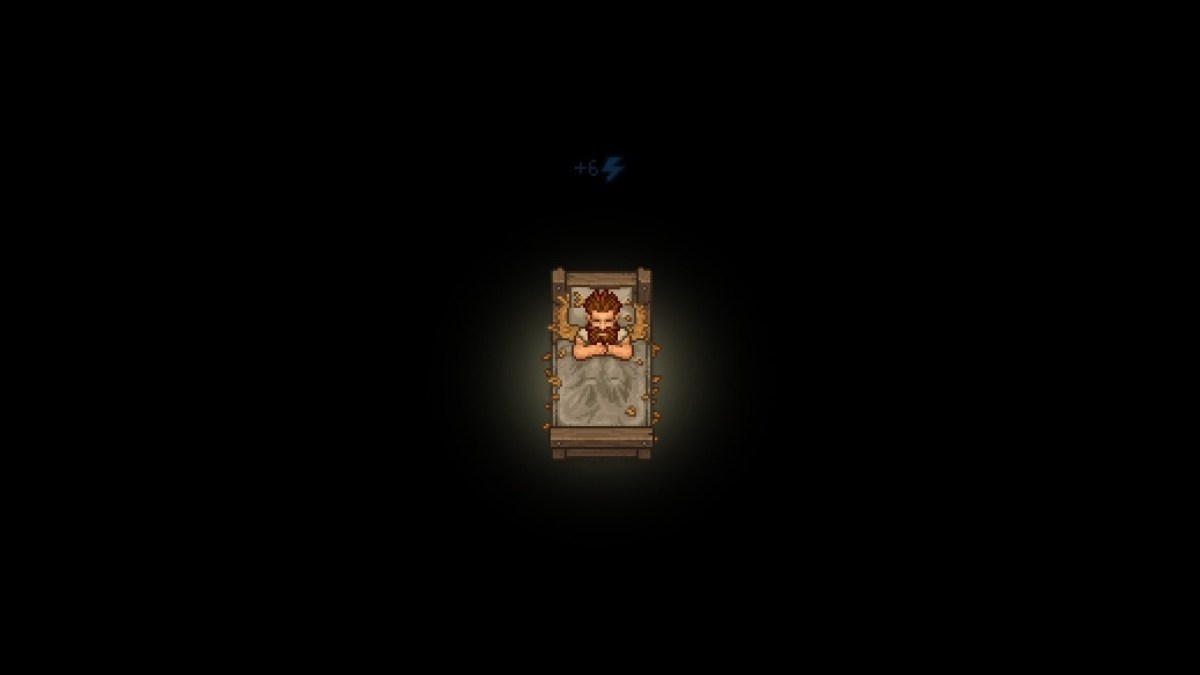
Energy is your most critical early-game resource and gates all other activity. You can restore it in two main ways: eating food and sleeping. Mushrooms and berries are the baseline early option, but they restore very little energy per unit.
Cooked food like Bread and fish restore far more, which is why unlocking a cooking recipe and the fishing rod early cuts down on how much time you spend sleeping. The most important habit is eating before you feel it coming rather than waiting until you are exhausted.
When energy drops very low, insanity builds faster, which then lowers your maximum energy in a compounding way that makes recovery harder. Keep food in your inventory and use it proactively.
How Do You Lower Insanity in Graveyard Keeper 2?
Insanity, the purple brain icon in the top-left corner next to your energy, climbs mainly from handling corpses, and even routine crafting builds it over time. Its immediate effect is lowering your maximum energy, so high insanity limits how much work you can get done before you rest.
Beer from the Tavern is the easiest early way to lower insanity. Sleep also lowers it, but only when you are tired, so it is not a reliable way to manage insanity mid-day. Watch the meter and reduce it before it climbs high enough to shrink your working capacity.
How Do You Unlock Perks and Inspirations in Graveyard Keeper 2?
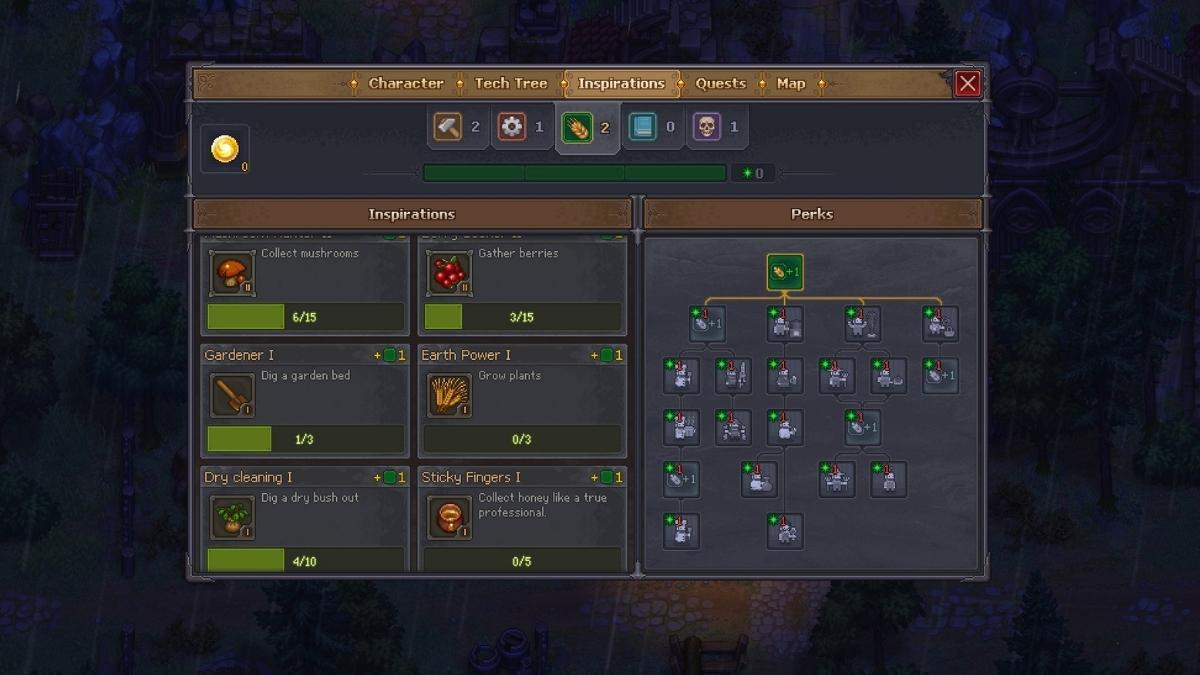
Inspiration is a separate progression meter from Tech Points. Actions like cutting trees, gathering mushrooms and berries, and crafting fill an Inspiration bar. When it fills, it converts into a star-shaped point that you spend on perks and talent upgrades through the Inspiration system.
Your first few Inspiration points come free, but later unlocks cost Faith. Because of that, the best early strategy is to grind actions that fill the bar while you go about your normal resource gathering, rather than treating Inspiration as a separate goal to chase.
Unlocking perks this way is faster in practice than rushing story quests specifically for them, and achievements that grant points are worth prioritizing for the same reason.
NOTE: Perks from Inspiration help you directly or indirectly raise your Mastery. If you are low on Mastery, prioritize Inspiration upgrades.
Frequently Asked Questions (FAQs)
The first thing you should unlock is wood processing in the Tech Tree. Wood and planks are required for almost every early recipe and building, and running short of them blocks your progress. Then go for the pottery quest to unlock fishing.
White and red skulls represent a corpse's purity and corruption levels, respectively, and they cancel each other out to produce a net score. For burial, you want a high net white skull count, achieved by removing corrupted organs during autopsy. Red skulls serve a separate function: heavily corrupted bodies with high red skull counts produce stronger zombies, so don't bury a high-red-skull corpse in a grave when it could instead become a more powerful zombie worker.
No. Graveyard Keeper 2 is single-player only. No co-op mode has been announced or listed on the store page.
Yes. A free demo went live on September 14, 2026, and covers the opening few hours up to the introduction of The Town. It is available on PC, PlayStation, Xbox, Nintendo Switch, and Switch 2, and it stays playable until the full game releases.
Graveyard Keeper 2 launches on September 22, 2026. It releases on Steam, Xbox, PlayStation, Nintendo Switch, and Switch 2, and also comes to the Epic Games Store and GOG on the same day. Pre-orders are $19.99 USD ahead of the $24.99 full price.
Yes. If you play the demo and then buy the full game, your demo save transfers, so you can pick up exactly where you left off instead of restarting.


