




Updated March 12, 2026: Slay the Spire 2 launched on Steam Early Access on March 5, 2026. Everything in this guide reflects the current Early Access build. Mega Crit is patching frequently, so some numbers may shift over time. We'll keep this updated.
If your first few runs in Slay the Spire 2 ended somewhere in Act 1 with very little explanation, that's completely normal. Mega Crit's long-awaited sequel to the genre-defining roguelike deckbuilder is set 1,000 years after the original, and it doesn't slow down to hold your hand. This Slay the Spire 2 beginner's guide breaks down everything you need to know to stop dying early and actually start climbing.
Is Slay the Spire 2 Beginner-Friendly?
Yes, but it punishes passive play more than most card games. If you've never touched the original Slay the Spire, you can absolutely start here. The core loop is self-contained, the tutorial covers the basics, and dying is part of the progression system. Your early runs are meant to introduce mechanics, expand your card pool through the Epoch system, and teach you enemy patterns through failure. Every run you do builds knowledge that makes the next one better.
NOTE: The Epoch system is essentially an in-game progression system through which you unlock new characters, new cards, mechanics, and new Relics.
If you're coming from digital card games like Hearthstone or Magic: The Gathering Arena, there's one mental shift you need to make immediately: stop expecting to execute a specific archetype. Slay the Spire 2 is a roguelike deckbuilder, which means every run is procedurally generated and the cards you want are never guaranteed. Forcing a predetermined strategy leads to drafting combo pieces without the support cards to activate them. Let the deck's identity emerge from what the game offers you.
Best Character for Beginners in Slay the Spire 2
The Ironclad is the best character for beginners in Slay the Spire 2, and he's also the first one you unlock by default. His starting relic, Burning Blood, heals 6 HP at the end of every combat encounter. That built-in sustain makes him by far the most forgiving character to learn on, because small mistakes in a fight don't stack up and kill your run as quickly as they would on other characters.
He starts with 80 HP (the highest base health in the game aside from special cases), and his game plan is direct: build Strength to amplify attack cards, use Exhaust mechanics to thin your deck mid-combat, and apply Vulnerable to enemies to increase all incoming damage.
Once you've cleared a run or two with the Ironclad and understand the core loop, The Silent is a great second character. She's slightly more technical, but her Sly keyword (cards with Sly play for free when discarded) gives her some of the most satisfying combo potential once you grasp how it works. She also relies on Poison and multi-hit Shiv cards, which are intuitive mechanics to learn after the Ironclad's straightforward Strength-based game plan.
Hold off on The Necrobinder and The Defect until you're comfortable with how runs flow. The Necrobinder starts with only 35 HP and uses her own health as a resource through Blood Magic, which requires tight HP management from very early in a run.
The Defect's Orb-based system, which involves channeling Lightning, Frost, Dark, Glass, and Plasma orbs with different passive effects, is genuinely complex to optimize as a new player. Both are rewarding once you understand them, but they will cut early runs short while you're still learning the basics.
Character Unlock Order
STS2 characters unlock in sequence. You don't need to win a run to trigger the next unlock, just complete one. If you want the full roster quickly, you can select Give Up from the pause menu immediately after starting each run, and it counts as a completed run for unlock purposes.
| Character | Unlock Details & Difficulty |
|---|---|
 Ironclad Ironclad | Unlock Requirement Available from the start |
 The Silent The Silent | Unlock Requirement Play a run as The Ironclad |
 Regent Regent | Unlock Requirement Play a run as The Silent |
 Necrobinder Necrobinder | Unlock Requirement Play a run as The Regent |
 Defect Defect | Unlock Requirement Play a run as The Necrobinder |
Slay the Spire 2 Core Loop, Explained
Every run in Slay the Spire 2 starts from scratch. You select a character, receive a Neow's Blessing (a starting bonus to choose from before the first fight), and begin climbing a procedurally generated three-act map. Here's what you're doing on each run:
- Fight enemies in turn-based combat. You start with 3 Energy per turn and draw 5 cards from your deck each turn. Play cards by spending Energy, then end your turn.
- Win fights to earn rewards: a choice of one card to add to your deck, Gold, and sometimes a Potion.
- Navigate the map to reach Elite enemies, Merchants, Campfires, Treasure chests, and Event rooms (the question marks) before facing the Act boss.
- Defeat the boss at the end of each Act to progress to the next one. There are three Acts in a standard run, each with two branching path variants.
- Death resets the run but not your Epoch progress, which permanently unlocks new cards, relics, and potions over time.
TIP: Don't sit in your potions too long, as you'll often get new ones, but your slots will be full and there will be no place to add them. Use potions in key moments, but feel free to use them often. There will always be new ones.
Block is generated fresh each turn and does not carry over. Attack cards deal damage. Skill cards typically generate Block or apply status effects. Power cards grant permanent buffs for the rest of the combat. Debuffs like Weak (reduces attack damage by 25%) and Vulnerable (increases incoming damage by 50%) are crucial to understand early.
How to Build a Deck in Slay the Spire 2
Deck building is the most important skill in Slay the Spire 2, and the single biggest mistake new players make is adding a card after every fight. It feels rewarding to take cards, but a bloated deck is an inconsistent deck. When you're staring down a boss hit for 45 damage and need a Block card right now, drawing it from a 40-card pile is a gamble you'll lose far too often. Aim to keep your deck between 20 and 25 cards throughout the run.
Here's the framework I use when evaluating every card offer:
- Does this card fix a specific weakness right now? If your Block generation is already solid, skip the extra Shield card. If you have no answer to high-attack enemies and a Defend-replacing Block card shows up, take it.
- Does this card work independently? Cards that function well on their own without requiring another specific card in hand are always safer early. Combo pieces are great late in a run when you already have half the combo built. Taking them in Act 1 often just creates dead draws.
- Does this card fit the identity the run is forming? If early rewards keep offering Poison cards as The Silent, that's the run telling you to build around Poison. Commit to it. Don't pivot halfway and end up with a deck that's half-Poison, half-Shiv, and fully mediocre.
Your starting deck contains five Strike cards and five Defend cards. Both are below average very quickly. Use the Card Removal Service at the Merchant to strip them out as soon as you can afford it. The first removal costs 75 Gold. Subsequent removals cost 100 Gold. Prioritize removing Strikes over Defends in most situations, and use Event rooms that offer card removal whenever the trade makes sense for your current deck.
One mechanic that's new to STS2 and catches beginners off guard: Enchantments. Certain rare Events can apply a persistent modifier to one of your cards, shown in purple text. These modifiers last the entire run and can dramatically shift how a card plays. A card with Corrupted, for example, deals 50% more damage but costs you 3 HP each time you play it.
TIP: Read Enchantments carefully before committing, especially on the Necrobinder, where HP management is already tight. Many of them can be a double-edged swords.
There are also Quest Cards, which are unplayable "dead" cards in your deck until you fulfill a specific in-run condition. Only take Quest Cards if your deck is already strong enough to carry the dead weight while you work toward the condition.
TIP: At the end of Act 1, your deck should have fewer than 20 cards, at least two Relics from Elite defeats, and at least one Potion. If you're entering the Act 1 boss without any Relics, the run is already behind where it needs to be.
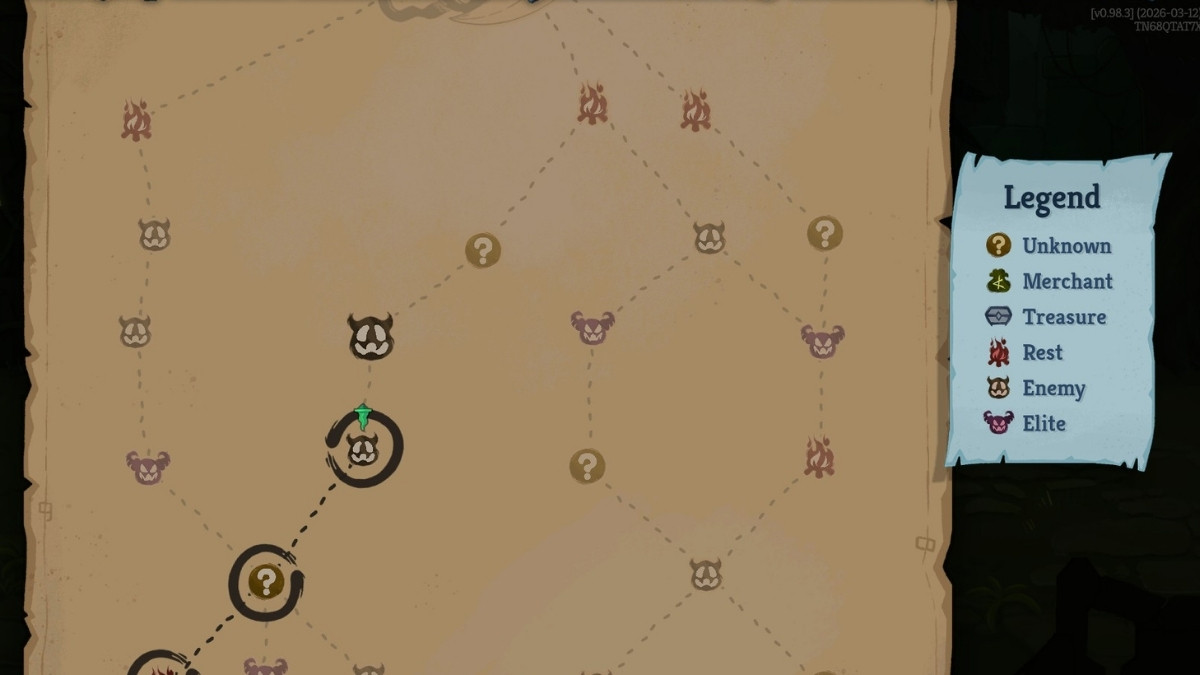
The map is where a lot of early runs fall apart, not because players make wrong choices, but because they don't look at it before making choices. The first thing you should do when entering a new Act is scroll to the top of the map and identify the Act boss. Every boss has a specific mechanic that punishes certain deck types. A boss that places a hard cap on damage received per round destroys burst-only decks. A boss that is a strict tempo check destroys slow, setup-heavy decks. Knowing what you're walking into lets you draft the right tools as you climb.
Here's what each node type on the map does:
| Map Icon Legend | |
|---|---|
 Combat Combat | Combat Rooms Standard enemy encounters. The main source of card rewards and Gold needed to build your deck. |
 Elite Elite | Elite Rooms Tougher enemies that drop a Relic, a card reward, Gold, and a potential Potion on defeat. High risk, high reward. |
 Shop Shop | Merchant Buy cards, Relics, Potions, and use the Card Removal Service. Visit early if you have extra Gold. |
 Rest Rest | Rest Site (Campfire) Rest to heal 30% of your max HP, or Smith to upgrade one card. |
 Treasure Treasure | Treasure Rooms Free Relic. Always visit these whenever they appear on your path. |
 Event Event | Event Rooms (?) Unknown encounters that can range from free loot to dangerous debuffs. Use them when your deck needs a wildcard boost. |
The ideal path through an Act puts a Campfire directly before an Elite encounter whenever possible. That way, you can upgrade a key card for a power spike and then immediately fight the Elite from a stronger position.
In Slay the Spire 2, each Act now has two branching variants, meaning the path can lead through alternate enemy sets and environments. The boss at the top always waits for you, but the enemies you face getting there can vary. Plan your path early and stay flexible as the map branches.
TIP: When entering a Shop, don't feel obligated to spend your hard-earned gold. If you don't find anything that suits your needs, you can safely leave without purchasing anything and save money for a bigger purchase the next time you enter the shop. Also, keep an eye out for discounts (items with prices colored green); sometimes you can buy good stuff for a significantly lower price.
How to Use Campfires in Slay the Spire 2 (Rest vs. Upgrade)
Every Campfire gives you a binary choice: rest to recover 30% of your maximum HP, or Smith to upgrade one card. In most situations, upgrading is the stronger call. Here's why.
Healing delays a problem that upgrading solves. If you're consistently entering Campfires at low HP, it's usually because fights are taking too long or dealing too much damage, which means your offense or defense isn't efficient enough. Upgrading a key damage card shortens future fights, which means less damage taken over the rest of the run. Healing 15 or 20 HP buys you one more fight at most.
The exception: if you're heading into the Act boss at critically low health and your deck is already strong, rest. A dead run teaches you nothing, and upgrades are worthless at zero HP.
When you do Smith, prioritize in this order:
- Your primary win condition card. Whatever card the deck is built around, upgrade it first. For an Ironclad Strength build, that's usually a high-damage Attack that scales with Strength.
- High-cost cards that become cheaper when upgraded. A card that drops from 2 Energy to 1 Energy when upgraded is a massive efficiency gain over a full run.
- Block cards entering a boss fight. Upgraded Block cards generate more Block per Energy, which can make or break a boss encounter.
Target at least two Smiths per run by deliberately pathing through Campfire nodes. Three is better if the map allows it.
How to Fight Elites in Slay the Spire 2
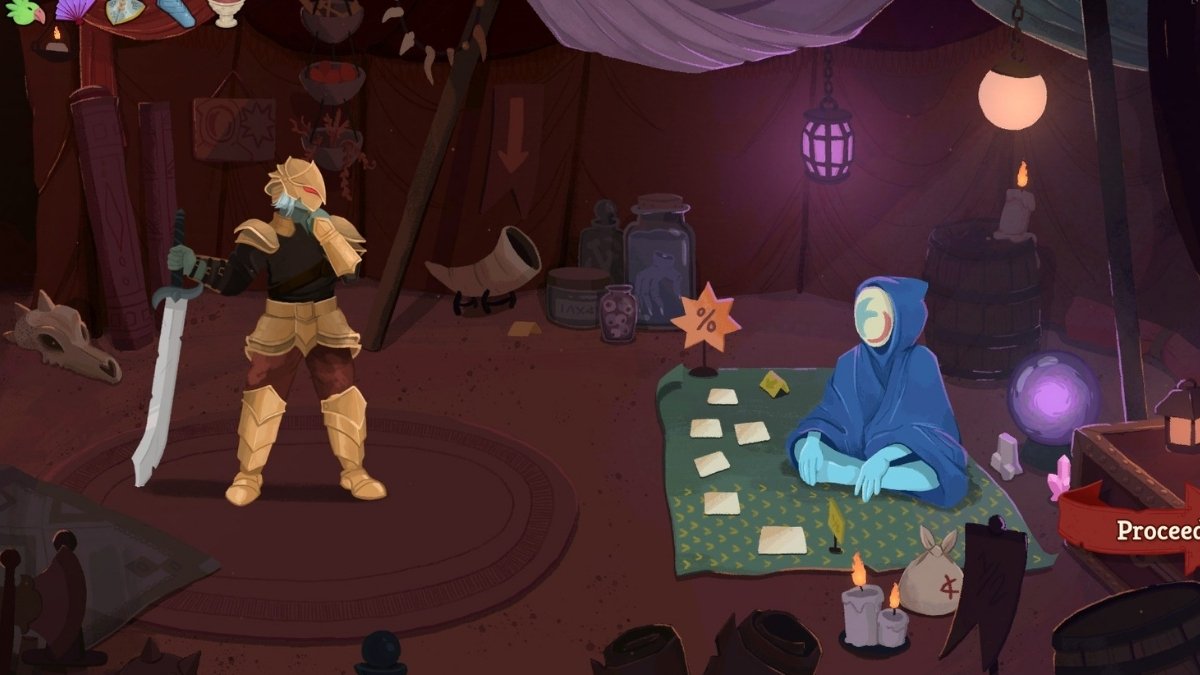
Elite encounters are the primary source of Relic acquisition in Slay the Spire 2, and Relics are the engine that separates runs that reach Act 3 from runs that stall in Act 2. Fight at least two Elites per Act. Three is the aggressive default if your deck can handle it.
The preparation steps before an Elite fight matter more than the fight itself:
- Path to a Campfire first. If the map allows it, hit a Campfire before an Elite to upgrade a key card. Do not walk into an Elite fight at critically low HP without a plan. Reroute to a standard combat room or Campfire first, even if it costs you map efficiency.
- Read the Elite's intent before playing anything. Elites in STS2 have specific mechanics. Some have hard caps on damage received per round, which makes burst-only hands inefficient. Others spend early turns buffing themselves, which gives you free turns to generate Block or apply debuffs. Knowing the intent icon changes how you order your plays.
- Use Potions here, not at the boss. This is counterintuitive, but a Potion spent shortening an Elite fight reduces total damage taken when entering the next room. The boss has fixed HP. The Elite is the variable. Shortening Elite fights efficiently is almost always a better trade than hoarding Potions for a boss where your deck should already carry the fight.
A new mechanic to watch for in STS2 is Durability. Some Relics and cards now have a Durability value, which limits how many times they activate per combat. Once a Relic runs out of Durability, it shuts down until the next encounter. Don't rely on a fragile Relic to bail you out during a long Elite fight if it has already fired multiple times in the same combat.
TIP: Aim for two to three Elite fights per Act. Skipping Elites to preserve HP is one of the most common beginner mistakes. You arrive at the boss with fewer Relics, less Gold, and a weaker deck, and the boss punishes all three.
How to Use Relics in Slay the Spire 2
Relics are passive bonuses that apply across every fight for the entire run. A single good Relic compounds over dozens of encounters in ways that a single card almost never does. Understanding Relics and how they interact with your deck is what separates players who reach Ascension from those who stall out in Act 2.
Here are the principles for using Relics effectively:
- Defeat Elites to get Relics. It's the most reliable source. Boss fights also award Relics, but you don't reach bosses without fighting Elites first.
- Prioritize Merchant Relics over card purchases when Gold allows. A card improves one slot of your hand. A Relic improves every single fight from the moment you pick it up.
- Match Relics to your current deck identity. Orichalcum (provides Block when you end your turn with zero Block) is excellent for aggressive decks that rarely generate Block on their own. Vajra (grants 1 Strength at the start of each combat) is a strong default multiplier for Strength-scaling Ironclad builds. Mummified Hand is a build-defining piece for certain energy-heavy archetypes. Don't force a Relic into a deck that doesn't use it.
- Don't skip Treasure chests. Free Relics from chests require no fight and no Gold. Always route through them.
- Know which Relics are run-defining. Some Relics in STS2 are strong in any deck. Others completely change the deck's direction. If you pick up a Relic mid-run that enables a totally different strategy than what you've been building, evaluate honestly whether the pivot is worth it. Sometimes it is. Most of the time, finishing the build you already have is the stronger call.
All Characters in Slay the Spire 2
Here's a quick rundown of all five characters available at Early Access launch and what makes each of them tick.
| Character | Class Identity & Mechanics |
|---|---|
| Ironclad | Core Identity Strength scaling, Exhaust synergies Key Mechanic Burning Blood: Heals 6 HP after combat. |
| The Silent | Core Identity Poison, Shivs, discard combos Key Mechanic Sly: Discard cards to play them for free. |
| Regent | Core Identity Stars resource, Sovereign Blade Key Mechanic Stars accumulate and carry over between turns. |
| Necrobinder | Core Identity Blood Magic, Doom, companion Osty Key Mechanic Spends own HP to fuel powerful abilities. |
| Defect | Core Identity Orb channeling, status card archetype Key Mechanic Lightning, Frost, Dark, Glass, and Plasma Orbs. |
The Necrobinder is worth a special mention because her companion, Osty (a reanimated skeletal hand), works as a separate entity with its own HP pool. Osty can absorb incoming damage meant for the Necrobinder and is immune to debuffs applied to her. You can sacrifice Osty for burst damage and resummon him, or invest in building his HP for sustained protection.
Her Doom mechanic kills enemies instantly when their Doom stack meets or exceeds their current HP at the end of a turn, which is one of the most satisfying executions in the game once you understand how to stack it.
The Regent is the current star of the Early Access meta. His Stars resource accumulates between turns rather than resetting, which lets him build toward his Sovereign Blade for a single devastating strike. He can also transform cards into Minions that fight on his behalf and has unique synergy with Colorless cards. He rewards patience over aggression, which makes him interesting but not ideal as a first character.
Quick Beginner Tips for Slay the Spire 2
- You can skip card rewards. After every fight, you choose between up to three cards or nothing. Choosing nothing is always valid. A lean deck beats a bloated one.
- HP is a resource, not a score. Your run ends at zero. Every point above zero is available to trade for advantages on the map. Taking some damage in a fight to preserve a Potion or save Energy for a better play is often the right call.
- Check enemy intent before every turn. The icon above each enemy shows what they plan to do. If an enemy is defending this turn, use it to set up your offense. If they're about to hit for 30, prioritize Block.
- There is no turn timer. Take your time. Slay the Spire 2 has no clock, forcing you to rush decisions. Think through your hand before playing a single card.
- Learn the Epoch system. Epochs are STS2's meta-progression framework. Completing runs, defeating bosses, and hitting character milestones unlock new Relics, cards, and Potions that enter the loot pool for all future runs. Your first five or ten runs will have a noticeably smaller pool than later ones. That's intentional.
- Don't hoard Potions for the boss. Use them during Elite fights to shorten dangerous encounters and reduce total HP loss entering the next room.
- Colorless cards are stronger in STS2. Mega Crit significantly expanded the role of Colorless cards in the sequel. Some of the best early pickups are Colorless, so don't dismiss them because they aren't character-specific.
Slay the Spire 2 FAQ
No. As of the March 2026 Early Access launch, Slay the Spire 2 is only available on PC via Steam (Windows, macOS, and Linux/SteamOS). Console versions for PS5, Xbox, and Nintendo Switch 2 are planned for the full 1.0 release, which Mega Crit has estimated for 2027. The game is Steam Deck Ready at launch.
No. Slay the Spire 2 is a fully standalone experience. Each run is self-contained, and the core mechanics are introduced in-game. Veterans of the original will recognize the loop and many returning characters, but newcomers can start directly with STS2 without missing anything essential.
Characters unlock sequentially. Ironclad is available from the start. Playing any run as Ironclad (you don't need to win) unlocks The Silent. Playing a run as The Silent unlocks The Regent. Playing a run as The Regent unlocks The Necrobinder. Playing a run as The Necrobinder unlocks The Defect. If you select Give Up from the pause menu immediately after starting a run, it still counts as a completed run for unlock purposes.
The Epoch system is STS2's meta-progression framework. Completing runs, defeating bosses, and hitting character-specific milestones unlock new Relics, cards, Potions, and other content that enter the loot pool for all future runs. The Epoch progression screen is accessible from the main menu Timeline screen. Characters beyond The Ironclad are also gated behind Epoch progress.
Slay the Spire 2 introduces a 4-player online co-op mode, which is the first multiplayer mode in the franchise's history. Players can coordinate paths on the map, share Potions, and watch each other's combat in real-time. The mode introduces team-specific cards and a Combo system where one player's debuff can trigger a teammate's follow-up. For beginners, it's worth learning the solo loop first before jumping into co-op, since the added complexity can make learning core mechanics harder.
Slay the Spire 2 costs $24.99 on Steam during Early Access. Mega Crit has stated the price will likely increase at the full 1.0 release. There are no microtransactions or battle passes.
Sly is The Silent's unique keyword in STS2. When you discard a card that has the Sly keyword, it plays automatically for free. This turns what was previously a cost (discarding cards) into a major advantage, and it opens up some of the deepest combo potential in the game when combined with The Silent's existing discard, Poison, and Shiv toolkit.
Upgrade (Smith) almost always. Upgrading a key card shortens future fights, which means less total damage taken over the rest of the run. Healing 30% of your max HP only buys you one or two more fights at the cost of a power spike that would compound across the entire act. The exception is entering the Act boss at critically low health when your deck is already strong. In that case, resting is correct.
Final Thoughts
The biggest thing I'd tell anyone new to Slay the Spire 2: don't treat deaths as failures. The game is designed around dying and learning. Every run that ends in Act 1 teaches you which cards to pass on, which Elite mechanics to prepare for, and how to read a map before you're already deep in it. Start with The Ironclad, keep your deck lean, fight your Elites, and let the run tell you what build it wants to be. The rest comes with time.
We'll keep updating this Slay the Spire 2 Beginner's Guide as Mega Crit patches the game through Early Access. In the meantime, check out our Slay the Spire 2 Tier List for a full character and Relic ranking, and follow us on Twitter and Facebook to get updates on your favorite games!
 Nikola is a Senior Staff Writer at Pro Game Guides with over 13 years of experience in gaming journalism. He has been playing video games since his father bought him an NES and a Sega Mega Drive in the early 1990s. Over the years, he has mainly become a PC gamer with a love for narrative-driven RPGs, real-time strategy games, and psychological/survival horror titles. Still, he enjoys any game that’s worth his time.