


Updated January 21, 2026
Added Dayan, Obambo, and Gallu ghost speeds from Winter 2025 update. Updated total ghost count to 27 with new survival strategies, BPM footstep guide, and difficulty modifier charts.
If you find yourself having to tango with a ghost in Phasmophobia for objectives or simply bad luck, understanding its movement speed is half the battle. Some are faster on their ghostly feet than others, so here's everything you need to know about ghost movement speeds, footstep identification, and survival strategies in Phasmophobia.
Quick Overview
- 27 ghost types with three speed categories: Slow (<1.7 m/s), Normal (1.7 m/s), and Fast (>1.7 m/s)
- Standard ghost base speed: 1.7 m/s vs player walking speed of 1.6 m/s (ghosts are naturally faster)
- Player sprint speed: 3.0 m/s for 3 seconds with 5-second cooldown (average 2.125 m/s when sprinting continuously)
- Line-of-sight acceleration: Most ghosts speed up gradually when they can see you, reaching up to 2.805 m/s after 13 seconds
- Blood Moon effect: All ghosts move 15% faster with no countermeasures available
- Difficulty modifiers: 150% difficulty makes standard ghosts move at 2.55 m/s
- Fastest ghosts: Moroi (3.71 m/s at low sanity), Revenant (3.0 m/s when chasing), Deogen (3.0 m/s at distance)
- Unique speed mechanics: Nine ghosts have special speed-changing abilities based on conditions
- New ghosts: Dayan, Obambo, and Gallu added in Winter 2025 update with unique movement patterns
- Speed as evidence: Footstep timing and BPM can help identify ghost types when other evidence is limited
Player vs Ghost Speed Comparison
Understanding how your movement speed compares to ghost speeds is critical for survival in Phasmophobia. Here's what you need to know:
Player Movement Speeds:
- Walking: 1.6 m/s (slower than most ghosts)
- Sprinting: 3.0 m/s for 3 seconds
- Sprint cooldown: 5 seconds
- Continuous sprint average: 2.125 m/s (when alternating sprint/walk)
What This Means for Survival:
- Ghosts at base speed (1.7 m/s) will catch walking players
- Most ghosts with line-of-sight acceleration (2.805 m/s) will eventually catch continuous sprinting
- Moroi at max speed (3.71 m/s) cannot be outrun even at full sprint
- Strategic hiding is better than running for most ghost types
- Breaking line-of-sight prevents speed acceleration buildup
Difficulty Settings and Ghost Speed Modifiers
Ghost speed in Phasmophobia can be dramatically affected by custom difficulty settings. Understanding these modifiers is essential for accurate speed identification and survival strategy.
Standard Difficulty (100%): All ghosts move at their base speeds listed in the chart below
Increased Difficulty (150%): All ghost speeds increased by 50%
- Standard 1.7 m/s ghost → 2.55 m/s
- Jinn at max speed → 3.75 m/s
- Moroi max speed → 5.57 m/s (faster than player sprint!)
- Revenant when chasing → 4.5 m/s
Decreased Difficulty (50%): All speeds reduced by 50%
- Helpful for learning ghost behavior patterns
- Makes outrunning ghosts more viable
- Useful for completing difficult objectives
Important Note: These difficulty modifiers stack with special ghost abilities. A Jinn with a breaker on at 150% difficulty moves significantly faster than a standard ghost at 100% difficulty.
Phasmophobia Ghost Speed Chart
January 2026 Update | 27 Ghost Types Analyzed
Environmental & Tool Based
Triggered by active electronic equipment nearby. Base speed is 1.7 m/s.
Speed scales with room temperature. Fastest in freezing rooms; cannot accelerate with LoS.
Instant boost if Fuse Box is ON and player is at a distance. Boost drops when within 3m.
Player & Sanity Based
Speed increases as average team sanity decreases. Gains extra speed from Line of Sight.
Reacts to player movement. Slow when you stand still, accelerates when you run.
The "Snail or Jet" ghost. Slow when searching, instantly triples speed upon detecting a player.
Timing & Cycle Based
Ages over time. Starts aggressive and fast, ends the game slow and lethargic.
Switches between "Calm" (Standard) and "Aggressive" (Fast) states every 2 minutes.
Cycle-based speed: Normal, Enraged (Fastest), and Weakened (Slowest).
The Main Twin is 1.5 m/s. The Decoy Twin is 1.9 m/s. Which one hunts is random.
Always knows where you are. Extremely fast at a distance, crawls once it reaches you.
Can replicate any speed behavior listed above. Changes identity every 30 seconds to 2 minutes.
Phasmophobia Ghost Speed Chart - All 27 Ghosts
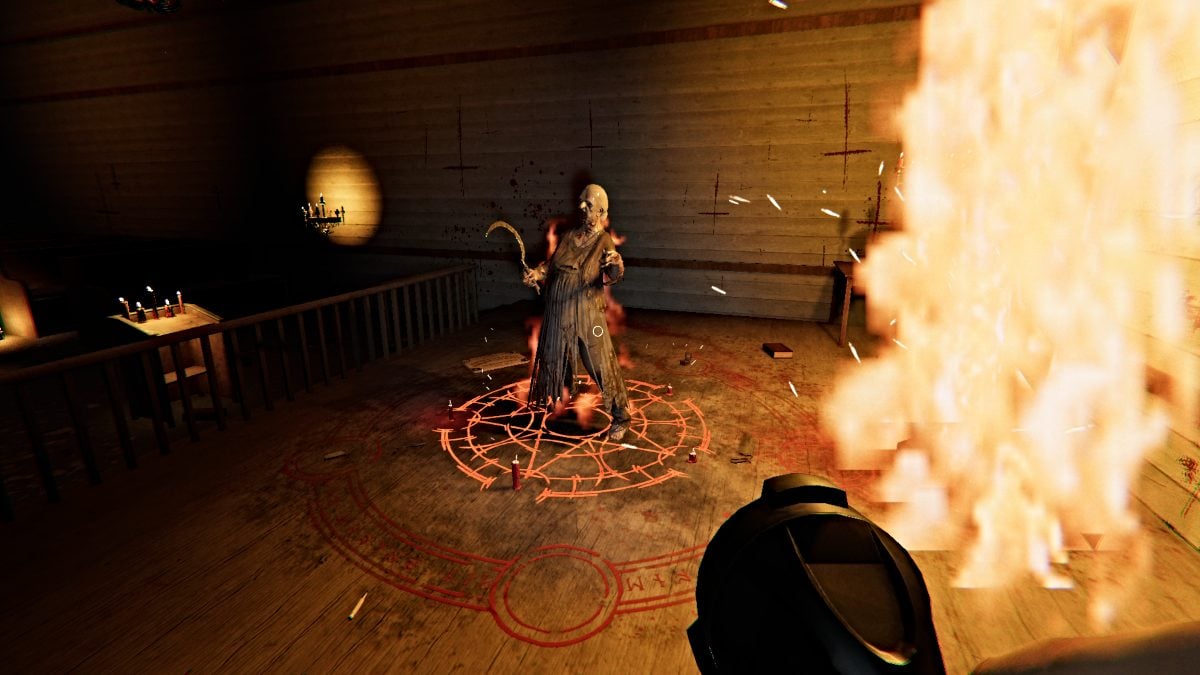
There are 27 types of ghosts in Phasmophobia as of the Winter 2025 update, which can be categorized into three primary categories based on their base speed. "Slow" ghosts are those with a speed below 1.7 m/s, while "Normal" ghosts are set at a standard speed of 1.7 m/s. "Fast" ghosts can reach speeds well above 1.7 meters per second and are considered the greatest threat.
Blood Moon Weather Effect
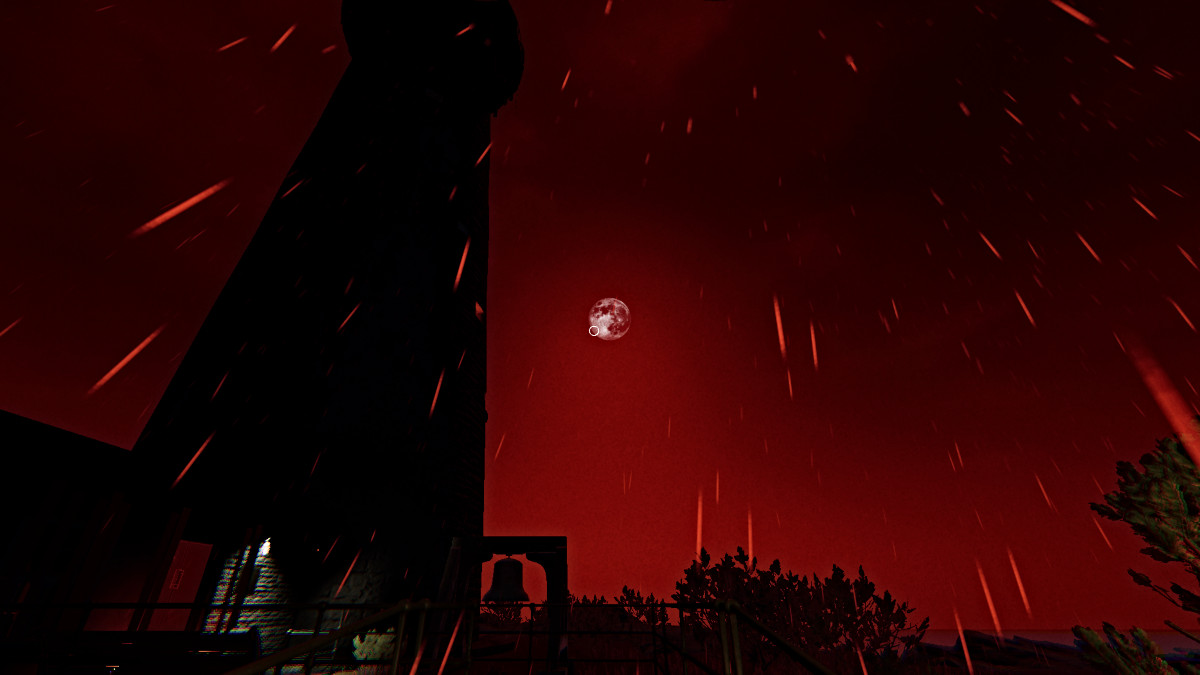
However, if you're playing on a map set to Blood Moon weather (seen above) from the 2024 Halloween event, ghosts will always be 15% faster during hunts, regardless of type, behavior, or conditions. You cannot use any resources or techniques to decrease their speed during this weather. Below, we've listed all ghosts in Phasmophobia, their base movement speeds, and whether they can change speeds.
| Phasmo Ghost Name | Ghost Speed | Speed Conditions |
|---|---|---|
| Banshee | 1.7 m/s | / |
| Dayan | 1.2 m/s - 2.25 m/s | Moves at 2.25 m/s if player is moving within 10 meters; 1.2 m/s if player is standing still within 10 meters; 1.7 m/s (normal LoS) beyond 10 meters. Overrides standard LoS acceleration. |
| Demon | 1.7 m/s | / |
| Deogen | 0.4 m/s - 3.0 m/s | Moves at 3.0 m/s when far from players (6+ meters), slows to 0.4 m/s when within 2.5 meters. Always knows player locations. Does not follow LoS rules. |
| Gallu | 1.36 m/s - 1.96 m/s | 3-state cycle: Normal (1.7 m/s, 50% sanity threshold), Enraged (1.96 m/s, 60% sanity via salt/crucifix use), Weakened (1.36 m/s, 40% sanity post-enraged). Protective equipment effectiveness changes with state. |
| Goryo | 1.7 m/s | / |
| Hantu | 1.44 m/s - 2.7 m/s | Speed increases in colder temperatures. Slowest at 1.4 m/s in warm rooms, fastest at 2.7 m/s in freezing rooms. Frequently turns off the breaker. |
| Jinn | 1.7 m/s - 2.5 m/s | Moves at fixed 2.5 m/s when the breaker is ON, the player is in line-of-sight, and the player is 3+ meters away. Reverts to 1.7 m/s standard (with LoS acceleration) if the breaker is off. |
| Mare | 1.7 m/s | / |
| Moroi | 1.5 m/s - 3.71 m/s | Base speed increases as average sanity drops (1.5 m/s at high sanity, 2.25 m/s at 0-5% sanity). With continuous LoS at the lowest sanity, it reaches 3.71 m/s. |
| Myling | 1.7 m/s | / |
| Obake | 1.7 m/s | / |
| Obambo | 1.7 m/s | 2-minute cycle between Calm and Aggressive states. Can switch states mid-hunt, causing sudden behavior and speed changes. Unpredictable hunting patterns. |
| Oni | 1.7 m/s | / |
| Onryo | 1.7 m/s | / |
| Phantom | 1.7 m/s | / |
| Poltergeist | 1.7 m/s | / |
| Raiju | 1.7 m/s - 2.5 m/s | Moves at a fixed 2.5 m/s when near active electronic equipment placed by players. Returns to standard 1.7 m/s (with LoS acceleration) when away from equipment. |
| Revenant | 1.0 - 3.0 m/s | Moves slowly at 1.0 m/s when not chasing. Speeds up to 3.0 m/s when it detects a player via voice/equipment/line-of-sight. Maintains speed until reaching the last known location, then decelerates. |
| Shade | 1.7 m/s | / |
| Spirit | 1.7 m/s | / |
| The Mimic | Varies | Changes identity every 30 seconds to 2 minutes, so movement speed changes to match the mimicked ghost. |
| The Twins | 1.5 m/s 1.9 m/s | since this ghost represents two entities, its movement speed goes back and forth between these two speeds |
| Thaye | 1.0 - 2.75 m/s | Starts at 2.75 m/s when young and decreases by 0.175 m/s each time it ages. Reaches 1.0 m/s when fully aged |
| Wraith | 1.7 m/s | / |
| Yokai | 1.7 m/s | / |
| Yurei | 1.7 m/s | / |
* Ghost speed data source: Phasmophobia Wiki
Related Guides
- Ghost Strengths and Weaknesses Guide - Complete ghost behavior breakdown
- Which Ghosts Can Teleport in Phasmophobia? - Mobility and positioning guide
- All Monkey Paw Wishes and Effects - Cursed possession guide
- Blood Moon Challenge Guide - Special event strategies
Most Dangerous & Fastest Ghosts
Moroi The Sanity Drainer
A Moroi's movement speed is entirely contingent on the average sanity of a single player or the group. The lower it is, the more in peril you are, as this ghost boasts the highest movement speed (3.71 m/s) in the game. However, the higher you keep your sanity, the slower a Moroi will be when it attempts to hunt.
How to Survive Moroi
- Keep sanity high using Sanity Pills and staying in lit areas
- Break the line of sight immediately when hunts begin
- Use tier 3 Incense for extended blinding (50% longer than other ghosts)
- Never run in open spaces - find hiding spots quickly
Revenant
This ghost flexes a terrifying speed of 3.0 m/s when it detects its target, which it can do by sound, equipment, and/or line-of-sight. Players often find themselves caught off guard by a Revenant, especially while playing with friends who are actively communicating with each other.
How to Survive Revenant:
- Break the line of sight around corners immediately
- Stay completely silent (no voice communication)
- Turn off all equipment
- Use tier 3 Incense to make it forget your location
- Relocate to a new hiding spot while it's blinded
- Listen for slow footsteps (indicates it's not chasing)
Jinn
The Jinn does have a standard movement speed of 1.7 m/s, but that's only if the breaker on the map is off. Typically, you want the breaker to be on to help preserve your sanity, but a Jinn's movement speed will increase to 2.5 m/s any time a breaker is kept on, and the player is in its line of sight.
How to Survive Jinn:
- Consider keeping the breaker off to eliminate the speed advantage
- Offset sanity drain with Sanity Medication and Firelights
- Stay close to the Jinn (within 3 meters) when the breaker is on
- Turn off the breaker before hunts if you identify it early
Raiju
A Raiju is one of the most aggressive ghost types in Phasmophobia, becoming more aggressive the more electronic equipment you activate on-site. Not only that, its movement speed during a hunt can go up to 2.5 m/s when near a bunch of that equipment, and it can also hunt sooner at 65% sanity while in those conditions.
How to Survive Raiju:
- Turn off unnecessary electronic equipment during hunts
- Remove equipment from the ghost's room before hunts
- Use minimal equipment when investigating
- Keep equipment centralized rather than spread throughout the map
Deogen
The Deogen is one of the trickiest ghosts because it always knows where every player is on the map, meaning you cannot hide from it conventionally. It moves at up to 3.0 m/s when far away, but has a critical weakness.
How to Survive Deogen:
- Do not hide - it will find you and corner you
- Keep the Deogen in direct line-of-sight
- Loop around furniture and obstacles
- Maintain close proximity (2-4 meters) to keep it slow
- Use its slowness against it by constantly moving in circles
Hantu
The Hantu can be another tricky ghost to handle, especially if you're on a map with snowy weather. That's because a Hantu's movement speed increases to up to 2.7 m/s in colder areas. It also tends to repeatedly trip the breaker, making it even more pesky to deal with.
How to Survive Hantu:
- Turn on the breaker immediately to warm up the building
- Stay in warmer rooms during hunts
- The Hantu will attempt to turn off the breaker - turn it back on
- Avoid freezing rooms during hunts
New Ghosts - Winter 2025 Update
The Winter 2025 update introduced three new ghost types with unique speed mechanics that can catch experienced players off guard. Here's how to survive encounters with Dayan, Obambo, and Gallu.
Dayan - The Movement Tracker
The Dayan is the most unique addition to Phasmophobia's roster, as it reacts specifically to player movement within 10 meters. This ghost has a speed range of 1.2 m/s to 2.25 m/s, making it either one of the slowest or moderately fast, depending on how you move.
How to Survive Dayan:
- Stand completely still when it's within 10 meters during hunts (reduces speed to 1.2 m/s)
- Use stationary hiding spots instead of looping strategies
- Movement triggers its high-speed mode (2.25 m/s), making running dangerous
- Find a hiding spot before hunts begin and don't move until it passes
- Test by stopping movement during hunts - if the ghost slows dramatically, it's likely Dayan
Obambo - The Unpredictable Switcher
Obambo operates on a 2-minute cycle between Calm and Aggressive states, but the real danger is that it can switch states mid-hunt. This makes it extremely unpredictable, as its behavior and hunting patterns can change without warning.
How to Survive Obambo:
- Track the approximate 2-minute state cycle timing
- Have multiple hiding spots planned - never rely on just one
- Expect sudden behavior changes during hunts
- Be ready to relocate if it suddenly becomes more aggressive
- Don't assume a hunt pattern will continue - Obambo can change mid-chase
Gallu - The State-Cycling Hunter
The Gallu cycles through three distinct states: Normal (1.7 m/s), Enraged (1.96 m/s), and Weakened (1.36 m/s). Using protective equipment like Crucifixes and Incense actually makes it angrier and faster initially, but then exhausts it, making protection more effective afterward.
How to Survive Gallu:
- Avoid overusing protective equipment early in the investigation
- Save Crucifixes and Incense for critical moments
- After it enters the Enraged state, protective equipment becomes MORE effective
- Watch for speed increases after using protection - a sign of the Enraged state
- In the Weakened state (1.36 m/s), you can easily outmaneuver it
- Strategic equipment timing is key - let it cycle to Weakened before heavy protection use
How to Identify Ghosts by Movement Speed and Footsteps
Ghosts in Phasmophobia each have their own unique behaviors as well as their own movement speed, and understanding those speeds is crucial to your survival. Otherwise, you may find yourself in a bad situation and unable to outrun a ghost or escape to a hiding spot (seen below) in time. That movement speed can also further help you identify the ghost when evidence is proving difficult to get.
Some ghosts in Phasmophobia are wickedly fast while others are sluggish, and depending on the type of ghost, their traits, and the environment around them, their speed may change during a hunt. Also, keep in mind that most ghosts in the game have a standard line-of-sight speed increase, meaning that they always speed up a set amount when they see the player, regardless of conditions.

The best strategy to determine your culprit's movement speed is to bring at least one Incense with you and find a reliable hiding spot on the map to camp inside, ensuring it's dark in your immediate area. As your sanity drops in the darkness, the ghost will become more active and prone to hunting. As soon as it does, listen for its footsteps as it moves around.
If you're playing with friends, you can expand this strategy by planting Sound Sensors in the area, allowing them to listen to the van's movement speed as well. The more ears you have listening in, the quicker you can figure it out.
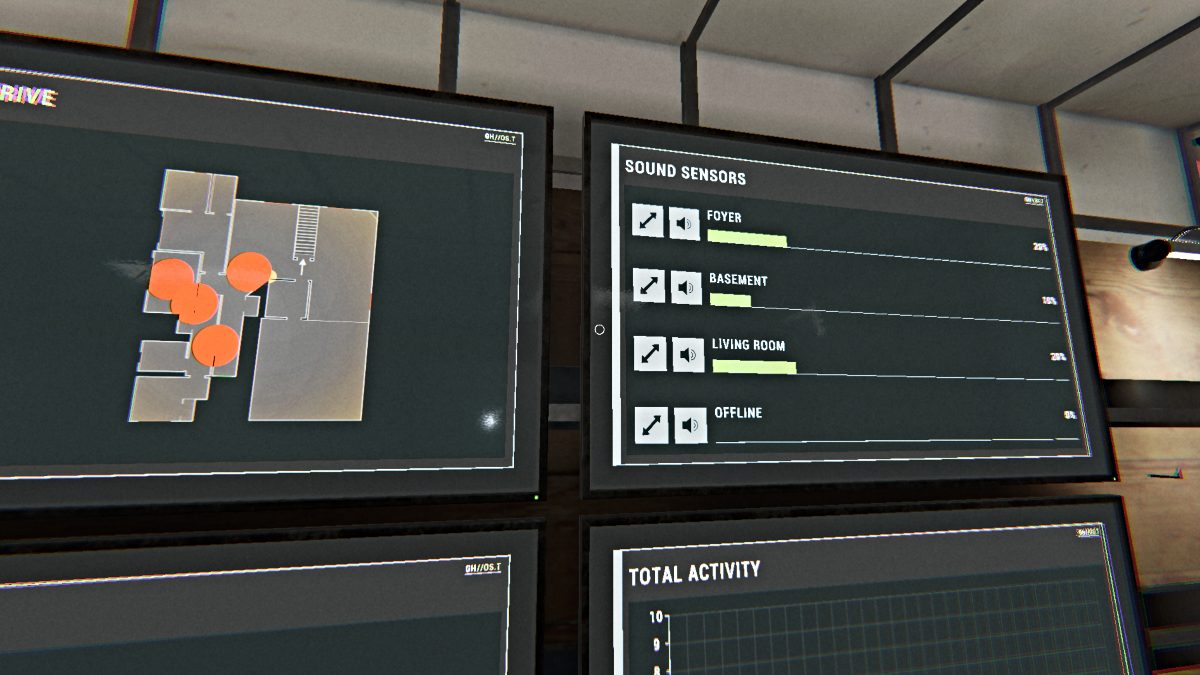
Finally, our Ghost Strengths and Weaknesses guide provides detailed information on the behaviors of every single ghost in Phasmophobia. As you listen to your ghost's footsteps, consult this to help pinpoint their identity.
Understanding ghost speed can be crucial evidence when other clues are difficult to obtain. Here's how to use speed as an identification tool:
Listening Technique
- Bring Incense for emergency escapes
- Find a reliable hiding spot (closet, locker, or dark corner)
- Wait for sanity to drop in darkness to trigger hunts
- Listen carefully to footstep intervals during hunts
- Note speed changes - does it speed up suddenly? Slow down when close?
Using Sound Sensors and Parabolic Microphone
When playing with friends, place Sound Sensors around the map so teammates in the van can monitor movement patterns and footstep timing. Multiple listeners can identify speed patterns faster.
Advanced: Using Tier 3 Parabolic Microphone for Speed Analysis
- Can pick up footsteps through floors and walls
- Allows safe speed analysis from van or remote location
- Best on large maps like High School, Prison, and Asylum
- Listen for footstep intervals without direct risk
- Perfect for identifying Revenant's slow-to-fast pattern
Advanced: Using BPM to Identify Ghost Speed
Experienced Phasmophobia players can identify ghosts by counting footstep beats per minute (BPM). This advanced technique provides precise speed identification even without visual confirmation.
Ghost Speed BPM Ranges:
- Very Slow Ghosts (1.0-1.2 m/s): 60-75 BPM
- Standard Ghost (1.7 m/s): 90-100 BPM
- Fast Ghosts (2.5 m/s): 130-140 BPM
- Revenant Chase (3.0 m/s): 150-160 BPM
- Moroi Max Speed (3.71 m/s): 180+ BPM
How to Use BPM Footstep Identification:
- Use a BPM counter tool or mobile app during hunts
- Tap along with the footsteps you hear from the hiding spot
- Compare the BPM result to ghost speed ranges above
- Cross-reference with other evidence for confirmation
- Track BPM changes during the hunt to identify LoS acceleration
Best Maps for BPM Testing:
- Ideal: Tanglewood, Ridgeview, Willow Street (small maps with clear audio)
- Challenging: Prison, High School, Sunny Meadows (large spaces make footsteps harder to hear)
- Tip: Use Sound Sensors to amplify footstep audio on larger maps
This method works exceptionally well when combined with the parabolic microphone, allowing you to count BPM from a completely safe distance.
Speed Categories to Listen For
Very Slow Footsteps (1.0 - 1.4 m/s):
- Revenant (when not chasing)
- Deogen (when close to you)
- Hantu (in warm rooms)
- Thaye (when fully aged)
- Dayan (when you're standing still within 10m)
- Gallu (in Weakened state)
Standard Footsteps (1.7 m/s + LoS acceleration):
- Most ghosts (Banshee, Demon, Goryo, Mare, Myling, Obake, Obambo, Oni, Onryo, Phantom, Poltergeist, Shade, Spirit, Wraith, Yokai, Yurei)
Fast Footsteps (2.0 - 2.7 m/s):
- Jinn (breaker on + LoS + distance)
- Raiju (near active equipment)
- Hantu (cold areas)
- Thaye (when young)
- The Twins (decoy twin at 1.9 m/s)
- Dayan (when you're moving within 10m)
- Gallu (in Enraged state)
Very Fast/Variable Footsteps (2.5 - 3.71 m/s):
- Moroi (low sanity)
- Revenant (when chasing)
- Deogen (far from you, then suddenly slow when close)
Behavioral Speed Clues
- Speed increases dramatically when seen: Most standard ghosts (LoS acceleration)
- Fast when far, slow when close: Deogen (unique signature)
- Slow then suddenly fast: Revenant (detected you)
- Speed changes with temperature: Hantu
- Speed changes with sanity: Moroi
- Speed changes near equipment: Raiju
- Speed changes with breaker: Jinn
- Alternating speeds: The Twins (two different entities)
- Reacts to your movement: Dayan (speeds up when you move, slows when still)
- Cycles between states: Obambo (2-min cycle), Gallu (3-state cycle)
Zero Evidence Ghost Identification by Speed (Nightmare/Insanity Mode)
When playing Nightmare or Insanity difficulty with limited or zero evidence, speed identification becomes your most valuable tool. Here's how experienced players identify ghosts using only movement patterns and footstep timing.
Speed-Only Identification Strategy:
- Trigger a controlled hunt - Use Ouija Board ("Where are you?") or drop sanity to 0% in the ghost room
- Observe from a safe hiding spot - Closet or locker with clear audio
- Listen for distinctive speed patterns:
- Slow → Very Fast suddenly = Revenant (just detected you)
- Fast when far, slow when close = Deogen (unique movement signature)
- Speed varies with room temperature = Hantu (listen in cold vs warm areas)
- Fast near equipment, normal elsewhere = Raiju (place electronics as test)
- Alternating fast/slow between hunts = The Twins or Obambo
- Slows dramatically when you stop moving = Dayan (test by freezing)
- Test breaker dependency - Jinn becomes much faster with breaker ON
- Monitor sanity correlation - Moroi gets progressively faster as group sanity drops
- Count footstep BPM - Use the BPM counter for precise speed measurement
Best Maps for Zero-Evidence Speed Testing:
- Recommended: Tanglewood (small, easy to monitor all areas)
- Recommended: Ridgeview (clear hallways for listening)
- Challenging: Willow Street (good if you know the layout)
- Avoid: Prison, High School, Sunny Meadows (too large, footsteps get lost)
Pro Tip for Advanced Players: Combine speed testing with behavioral observation (hunt frequency, interaction patterns, sanity drain) for the most accurate identification when evidence is unavailable.
How to Slow Down Ghosts - Advanced Strategies
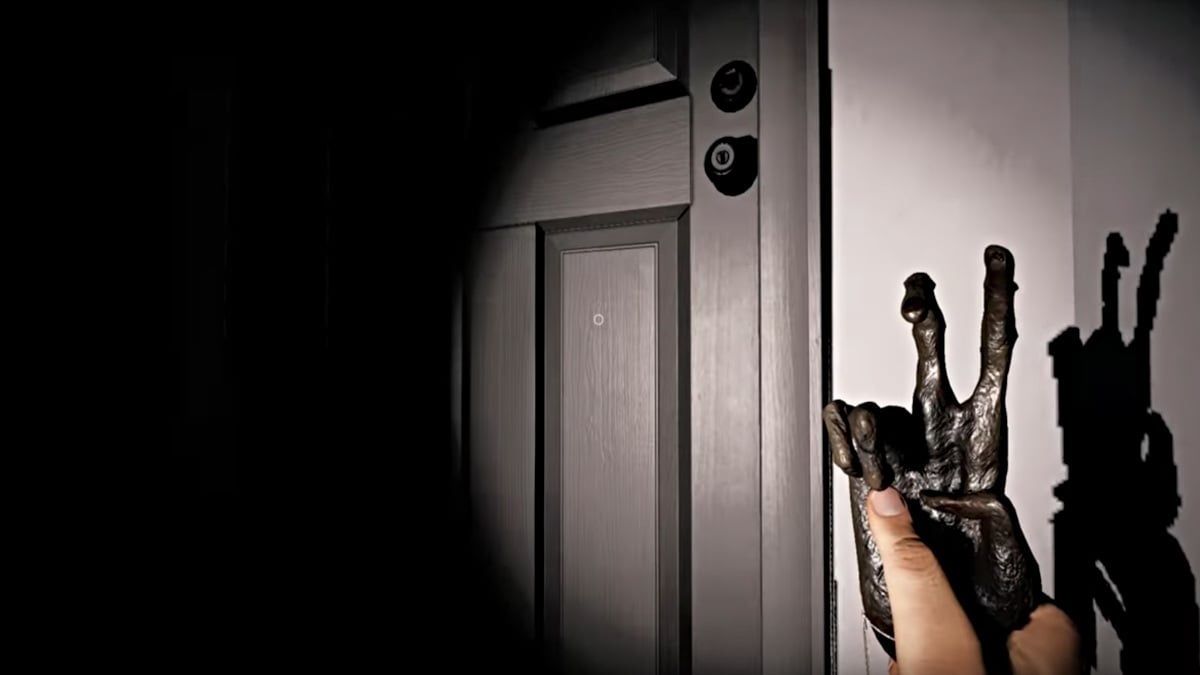
There are certain tricks you can make use of in Phasmophobia to help slow down different ghosts during hunts, and they range from using cursed objects like the Monkey Paw to using Incense to prevent hunts from happening at all or simply manipulating a ghost's basic behaviors.
Remember, if you're playing on a map with Blood Moon weather, these strategies will not apply as ghosts will be 15% faster no matter what.
General Strategies (All Ghosts)
Break Line-of-Sight:
- Turn corners immediately when hunts begin
- Get behind furniture, walls, or closed doors
- Prevents LoS acceleration from building up
Use Incense Strategically:
- Tier 1: 6 seconds of blindness, 90-second prevention range
- Tier 2: 9 seconds of blindness, 120-second prevention range
- Tier 3: 12 seconds of blindness, 150-second prevention range
- Ghosts forget your last location when smudged
- Buys time to relocate or reach hiding spots
Stay Silent:
- Avoid voice communication during hunts
- Turn off push-to-talk globally if possible
- Ghosts can hear players within 9 meters
Turn Off Equipment:
- Active electronics attract ghosts within 7.5 meters
- Drop the equipment if being chased
- Even flashlights attract ghosts when held
Blood Moon Warning:
- None of these strategies reduces the 15% speed increase
- Be extra cautious and prioritize hiding over running
How to slow down Hantu in Phasmophobia
Because the Hantu becomes faster in colder temperatures, turning on the generator is the most effective way to control its speed. The Hantu will attempt to turn off the generator to speed itself up, but will never turn it back on.
How to slow down Jinn in Phasmophobia
The Jinn is most dangerous, ironically, when it is farther away from the player, and the breaker is turned on. You can consider keeping the breaker off and offset your sanity drain with Sanity Medication and Firelights, or simply keep the Jinn in close enough proximity to where it won't hunt you down at a sprint.
How to slow down Raiju in Phasmophobia
The Raiju's speed increases around activated electronic equipment in Phasmophobia. If you turn off that equipment and/or remove it from the premises entirely, its movement will decrease to a standard speed.
How to slow down Revenant in Phasmophobia
A Revenant's speed is entirely dependent on catching the player one of three ways (sound/equipment/line-of-sight), and it can be difficult to escape it once it has caught you. However, if you manage to use an Incense (preferably tier 3) quickly enough to throw it off your scent and relocate to a new hiding spot, a Revenant will slow down significantly.
How to slow down Moroi in Phasmophobia
The Moroi's speed depends entirely on Sanity, making Sanity Pills necessary to slow them down. Staying in an area with light will also maintain the player's Sanity.
How to slow down Thaye in Phasmophobia
Because Thaye's speed decreases over time as it ages, one of the best strategies to slow it down is to simply stay inside the ghost's chosen room with Crucifixes and Incense (also known as 'Smudges') until it ages long enough.
How to slow down Dayan in Phasmophobia
The Dayan reacts to player movement within 10 meters. The key to slowing it down is simple: stop moving entirely. When you stand completely still within its proximity range, the Dayan slows to 1.2 m/s, making it one of the slowest ghosts. Any movement triggers its fast mode at 2.25 m/s.
How to slow down Gallu in Phasmophobia
The Gallu operates on a 3-state cycle, and, counterintuitively, using protective equipment initially makes it faster. To slow it down effectively, avoid overusing Crucifixes and Incense early in the investigation. After it enters the Enraged state and exhausts itself, it transitions to the Weakened state (1.36 m/s), where protective equipment becomes much more effective. Strategic timing of protection use is essential.
Phasmophobia Ghost Speeds FAQ
The standard base speed for most ghosts is 1.7 m/s, which is slightly faster than the player's walking speed of 1.6 m/s. However, most ghosts will gradually accelerate when they maintain line of sight with a player, reaching up to 2.805 m/s after 13 seconds of continuous chasing.
It depends on the ghost itself or whether a Blood Moon is occurring on the map. If there is a Blood Moon, the ghosts have a 15% movement speed increase, and you can't slow them down.
Yes, if there is a Blood Moon event, all ghosts will move 15% faster. Some ghosts, such as the Twins, the Mimic, Raiju, and Moroi, will also change speed under certain circumstances.
During Blood Moon weather events, all ghosts move 15% faster than their normal speeds, regardless of type, conditions, or player actions. Any equipment, strategy, or environmental manipulation cannot counter this speed increase. A standard 1.7 m/s ghost becomes 1.955 m/s, and a Moroi at maximum speed (3.71 m/s) becomes 4.27 m/s.
It depends on the ghost and the situation. Players walk at 1.6 m/s and sprint at 3.0 m/s for 3 seconds with a 5-second cooldown (average 2.125 m/s when sprinting continuously). You can temporarily outrun most standard ghosts.
Listen to footstep intervals and timing during hunts. Additionally, speed identification is most effective when combined with other evidence, such as EMF readings, ghost orbs, or spirit box responses.
Most ghosts have a line-of-sight (LoS) acceleration mechanic where they gradually speed up when they can see you
The Moroi is potentially the fastest ghost in the game, reaching up to 3.71 m/s at low sanity (0-5% average sanity) with continuous line-of-sight. This makes it impossible to outrun even at full sprint.
The Deogen becomes the slowest ghost when very close to players, moving at only 0.4 m/s within 2.5 meters of you. This is actually a strategic advantage you can exploit by keeping it close.
No, ghosts reset to their base speed at the start of each new hunt. Any line-of-sight acceleration or conditional speed increases from the previous hunt do not carry over.
There are currently 27 ghost types in Phasmophobia as of the Winter 2025 update (December 2024). The three newest additions are Dayan, Obambo, and Gallu.
The three newest ghosts are Dayan (movement-reactive speed), Obambo (2-minute state cycle), and Gallu (3-state aggression cycle), all added in the December 2024 Winter update.
Yes, custom difficulty settings with ghost speed percentage above 100% will make all ghosts proportionally faster. For example, at 150% difficulty, a standard 1.7 m/s ghost moves at 2.55 m/s.
Use a BPM counter tool or mobile app and tap along with the footsteps you hear during hunts. Standard ghosts move at 90-100 BPM, fast ghosts at 130-140 BPM, and very fast ghosts like Moroi can reach 180+ BPM.
Line-of-sight (LoS) acceleration is when most ghosts gradually speed up while they can see a player during hunts. They accelerate from 1.7 m/s to 2.805 m/s over 13 seconds of continuous visual contact.
Yes, Tier 3 parabolic microphones can pick up footsteps through floors and walls, allowing you to safely analyze ghost speed from a remote location, such as the van. This is especially useful on large maps like High School and Prison.
Now that you know more about ghost speeds, be sure to check out all of our Phasmophobia guides here at PGG, such as Which Ghosts can teleport.